Why Septic Backups Happen: Tree Roots, Clogs, and System Age Explained
A sewage backup rarely comes out of nowhere. In most cases, the septic tank failure signs were there for weeks: slow drains, gurgling toilets, a sewer smell near the yard. The real question is what caused the backup, because the cause decides the fix. A clogged filter costs little to clear. A dead leach field means digging up the yard. This guide walks through the seven most common causes of septic backups, from tree roots to plain old age, so you can match what you are seeing at home to what is likely going on underground.
Quick refresher before the list. A conventional septic system has two main parts: the tank, where solids settle out, and the drain field, which disperses the clarified liquid into the soil, according to the U.S. Environmental Protection Agency. Every cause below is a problem with one of those two parts or the pipes connecting them.
1. A Tank That Was Never Pumped on Schedule
An overdue pump out is the single most common cause of a septic backup. When nobody removes the solids, the sludge layer keeps rising until it overflows into the outlet and pushes toward the drain field. Once solids reach the drain lines and clog them, those lines generally cannot be cleaned out; they have to be replaced.
That is why the maintenance schedule matters more than any other item on this list. The EPA recommends inspecting the entire system every 1 to 3 years and pumping the tank every 3 to 5 years. For an active family of four, pumping every two to three years is generally advisable because of higher solids and water use, according to Penn State Extension.
If you just bought a Miami-area home and have no idea when the tank was last pumped, treat that as your starting point. A septic system inspection plus a pump out resets the clock, and then you can put the next service on the calendar and stop thinking about it.
2. Tree Roots Growing Into Pipes and Tank Seams
Tree roots follow moisture, and a septic system is the wettest thing in your yard. Roots work their way into small cracks in older pipes, joints, and tank seams, then grow until they choke the flow. In South Florida, ficus and other aggressive species are frequent offenders, and the damage builds quietly for years before anything backs up.
Root intrusion tends to show up as recurring clogs in the same line even after pumping. If your tank was serviced recently but drains keep slowing down, roots in the inlet or outlet pipe are a strong suspect. A camera inspection can confirm it without guesswork.
The trade-off to weigh: cutting roots out of a line is cheaper but temporary, since roots grow back toward the same crack. Replacing the damaged pipe section costs more upfront but ends the cycle. For a mature tree sitting right over the line, removal or rerouting the pipe may be the only lasting fix.
3. A Clogged Inlet Baffle or Effluent Filter
Not every backup means the system failed. Sometimes a single component is blocked. A clogged inlet baffle is a common cause of septic backups and should be one of the first things checked when a line into the tank stops flowing, according to the Washington State Department of Health.
On the outlet side, many modern tanks have an effluent filter that keeps solids out of the drain field. When that filter clogs, wastewater has nowhere to go and backs up into the house even though the tank and field are fine. Septic tank filter cleaning is a routine, low-cost service, and it is one of the cheapest problems on this list to fix.
This is also why a proper septic tank cleaning visit should include checking the baffles and filter, not just emptying the tank. If a company pumps and leaves without looking at either, the backup can return within days.
4. Grease Buildup, at Home and in Commercial Kitchens
Grease is a slow killer for septic systems. It cools, hardens, and coats pipes and baffles until flow chokes off. In a house, that means bacon fat and cooking oil down the kitchen sink. In a restaurant, the volume is far higher, which is exactly why commercial kitchens have grease traps in the first place.
For a Miami restaurant or cafe operator, a neglected grease trap is a double risk: a backup that shuts down the kitchen mid-service, and a failed county compliance check. Suppose a busy Little Havana kitchen skips two scheduled grease trap clean outs to save money. In that scenario, the trap overflows into the drain line during a Friday dinner rush, and the cost of the shutdown dwarfs a year of routine cleanings.
The prevention is not complicated. Homes should scrape grease into the trash, never the drain. Food service operations should keep grease trap cleaning on a recurring schedule tied to their actual grease output, not just the minimum the county requires.
5. A Failing or Saturated Leach Field
When the drain field can no longer absorb water, the whole system backs up no matter how clean the tank is. The field fails for a few reasons: solids from an unpumped tank clogged the lines, soil compacted under vehicle traffic, or years of use simply wore out the soil's ability to drain. Miami's high water table and heavy summer rains make saturation worse, since soaked ground has no room for more liquid.
Signs of Septic Tank Failure in the Drain Field
Watch for these signs of septic tank failure in the field, not the tank:
- Soggy or spongy ground over the drain field, even in dry weather
- Grass that is greener and taller in stripes over the lines
- Sewage odor in the yard rather than in the house
- Backups that return shortly after a pump out
That last one is the key diagnostic. If pumping fixes the problem for a week and then it comes back, the field is the likely culprit, and leach field repair is the conversation to have. This is one area where a professional evaluation is worth the service call; guessing wrong here means paying for the wrong repair.
6. System Age and Poor Original Installation
Even a well-maintained system wears out. With proper care, septic tanks can last up to 30 years, according to University of Florida IFAS. Past that point, concrete cracks, steel components rust, baffles crumble, and the drain field soil loses capacity. If your Miami-area home was built in the 1980s or earlier and still has its original system, age alone puts you at higher risk of a septic backup emergency, and it is worth having the system inspected before the next hurricane season rather than after a failure.
Installation shortcuts also come home to roost decades later. A properly built outlet pipe must sit lower than the inlet, since solids float on top and only liquid should exit toward the drain field, according to University of Nebraska-Lincoln Extension. Systems installed without a percolation test, or with poorly compacted fill around the pipe connections, tend to settle, crack, and fail earlier than they should.
You cannot fix a system's age, but you can plan around it. An older system needs shorter pumping intervals and more frequent inspections, so problems get caught while they are still small.
7. Sudden Overload: Guests, Rain, and Laundry Marathons
Sometimes the system is healthy but overwhelmed. A tank sized for a family of four cannot instantly handle a week of holiday houseguests, back-to-back laundry loads, and long showers. In addition, a tropical downpour can saturate the drain field at the same moment household water use peaks, and the combination pushes wastewater back up the line.
The signs look like failure but pass quickly: gurgling toilets and slow tubs during the surge, then normal drainage a day or two later. The fix is spacing out water use, running one laundry load per day, and holding off on big water tasks during heavy rain.
However, do not dismiss repeated overload symptoms. If the system chokes every time it rains or every time you have company, that is not a fluke; it is an early warning of septic tank failure signs telling you the tank or field is losing its margin.
How to Read Septic Tank Failure Signs and Match Them to a Cause
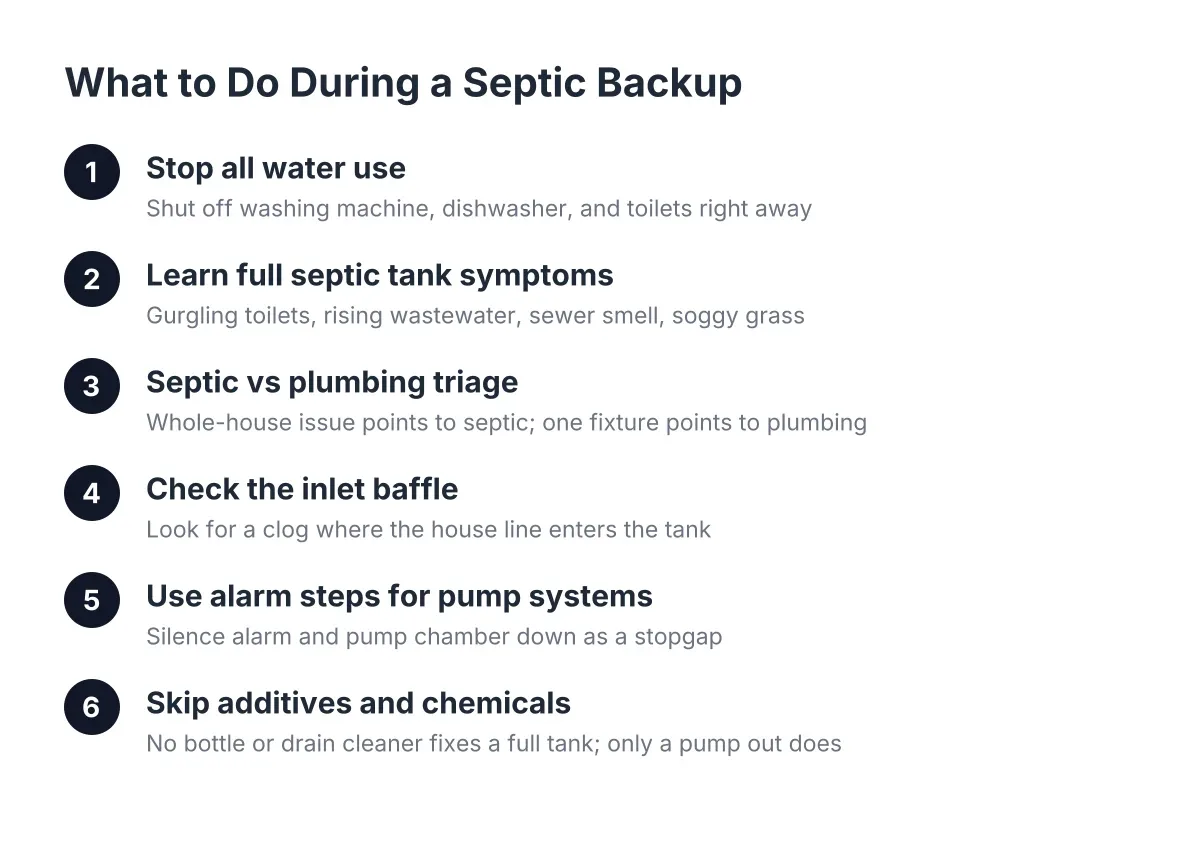
Septic tank failure signs point to different causes depending on where they show up and when. Symptoms inside the house usually mean a clog, a full tank, or a blocked filter. Symptoms in the yard usually mean a drain field problem. Timing tells you the rest.
Use this quick triage:
- Slow drains and gurgling in one fixture only: likely a plumbing clog, not the septic system.
- Slow drains and gurgling across the whole house: check the tank level, inlet baffle, and effluent filter first.
- Backup returns soon after pumping: suspect roots in a line or a failing leach field.
- Wet ground, odor, or lush grass over the field: the drain field is struggling, and pumping alone will not fix it.
- Symptoms only during rain or heavy use: overload, but shrinking margin if it keeps happening.
One honest caveat: this list narrows the possibilities, but only a camera inspection or a tank check confirms the cause. Underground problems can mimic each other, so bring in a local septic pro before paying for a major repair.
The Cheapest Fix Is the One You Schedule
Every cause on this list gets more expensive the longer it waits. Regular maintenance of $250 to $500 every three to five years is a bargain compared to repairing or replacing a failed system, which can run $5,000 to $15,000, according to the U.S. Environmental Protection Agency. That gap is the whole argument for a maintenance schedule.
There is a bigger-picture reason too. Well-maintained septic systems help protect Florida's groundwater, which supplies 90% of the state's drinking water, according to the Florida Department of Environmental Protection. Keeping your tank pumped is not just about avoiding a mess in the bathtub.
So if you cannot remember your last pump out, that is the sign. Book a septic system inspection with a local Miami-area service, get the tank pumped, note any early septic tank failure signs the tech points out, and put the next visit on the calendar. The homeowners who never face a 2am backup are the ones who made it boring years ago.
If you need septic tank pumping, Miami Septic Tanks can help.
Prefer to talk it through? Call (786) 756-8032 — a quick call is usually the fastest way to get a straight answer for your situation.