Septic System Cleaning — Complete Guide
septic system cleaning — The Complete Guide
If you own a home or manage a property in the Miami area, septic system cleaning is one of those services you know you need but rarely see explained clearly. Many companies use "pumping" and "cleaning" interchangeably, which makes it hard to know what you're actually paying for. This guide breaks down the real difference in the pumping vs cleaning septic debate, what a complete cleanout includes, and how to plan the right maintenance schedule for your property. By the end, you'll know exactly which service your tank needs and what questions to ask before anyone puts a hose in the ground.
What You'll Find in This Guide
Coming soon — we're building out this topic cluster.
Pumping vs Cleaning Septic: What's the Actual Difference?
Here's the confusion in a nutshell. Some companies say "pumping" when they mean removing liquid waste. Others say "cleaning" when they mean the exact same thing. As a result, two quotes for "septic tank cleaning" can describe two very different jobs at two very different prices.
To put it simply, pumping removes the liquid and floating waste from your tank. A vacuum truck pulls out the effluent and scum layer, and the job usually takes under an hour. However, pumping alone often leaves the compacted sludge layer sitting at the bottom of the tank. That sludge builds up over years, and it doesn't move without extra work.
A full septic system cleaning goes further. The technician pumps the tank, breaks up and removes the sludge layer, and often backflushes or rinses the tank walls. This means the tank comes back to something close to its original capacity. Beyond that, a thorough cleaning gives the technician a clear view of the tank's interior, so they can spot cracks, root intrusion, or baffle damage that a quick pump out would miss.
Why the Pumping vs Cleaning Septic Distinction Matters for Your Wallet
Why should you care about the terminology? Because the wrong service at the wrong time costs you money in both directions. If your tank only needs a routine pump out, paying for a full cleaning every single time is overkill. On the other hand, if sludge has been building for a decade, a basic pump out won't fix slow drains or sewage odors, and you'll pay for the truck visit and still have the problem.
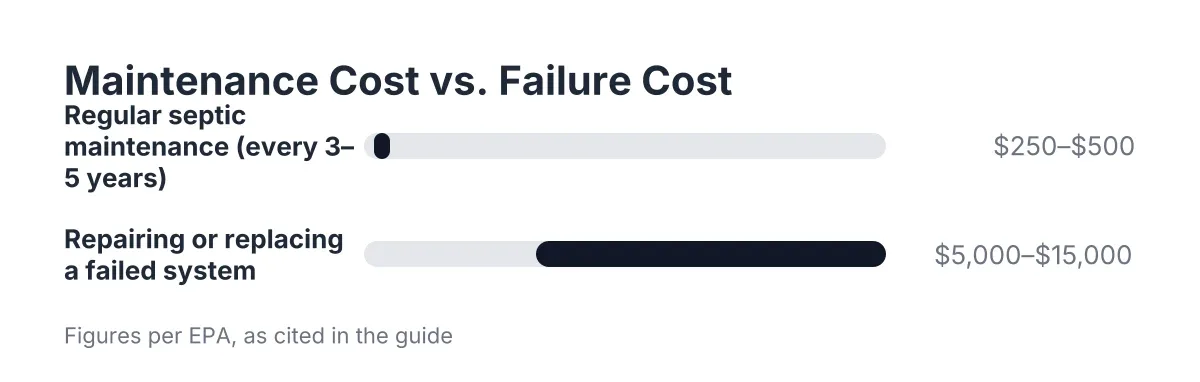
The financial stakes are real. According to the U.S. Environmental Protection Agency, regular septic maintenance runs $250 to $500 every three to five years. That's a bargain compared to repairing or replacing a failed system, which can cost between $5,000 and $15,000. In practice, most system failures trace back to skipped maintenance, not bad luck. Understanding pumping vs cleaning septic differences, and knowing which one to book, is how you stay on the cheap side of that equation.
When you call a provider, ask one direct question: does the quote include sludge removal, or is it a pump out only? A trustworthy local company will answer plainly. If they dodge the question, keep calling around.
What a Full Septic System Cleaning Includes
Once you've decided your tank needs more than a standard pump out, it helps to know what a complete septic system cleaning actually involves. That way, you can verify the crew did the full job before the truck leaves your driveway.
First, the technician locates and uncovers the tank access lids. In older Miami properties, lids sometimes sit under a foot or more of soil or landscaping. Next, the vacuum truck removes the liquid layer and the floating scum on top. So far, this matches a standard pump out.
The cleaning portion starts after that. The technician agitates the sludge layer at the bottom, often using the pumped liquid to break it apart, then vacuums out the loosened solids. Additionally, a thorough crew will rinse down the tank walls and check the inlet and outlet baffles. Those baffles keep solids from escaping into your drain field, so their condition matters more than most homeowners realize.
Don't Forget the Filter
Many modern tanks include an effluent filter on the outlet side. This small component catches solids before they reach the leach field, and it clogs over time. Consequently, septic tank filter cleaning should be part of any full-service visit. A clogged filter causes backups that mimic a full tank, so cleaning it can solve problems that seem much bigger than they are.
Inspection Comes with the Territory
An empty, clean tank is also the best opportunity for a real inspection. The EPA recommends inspecting the entire septic system every one to three years, and a cleaning visit is the natural time to do it. With the tank empty, a technician can see cracks, corrosion, groundwater intrusion, and root damage that stay hidden when the tank is full. For example, hairline cracks near the waterline often go unnoticed for years until they widen into expensive structural failures. Catching them during a routine cleaning turns a five-figure repair into a small fix.
Before the crew finishes, ask them to show you the empty tank or photos of it. A clean tank should have visible walls and a clear bottom. That said, some residue is normal — what you shouldn't see is a thick, undisturbed sludge blanket still sitting at the bottom.
Planning Septic Cleaning for Miami Homes and Businesses
Septic systems are far more common than most people assume. More than one in five households in the United States depend on individual septic systems or small community cluster systems, according to the EPA. In parts of Miami-Dade and the surrounding areas, that share runs even higher, especially in neighborhoods built before sewer lines expanded.
South Florida adds its own complications. Our high water table means tanks and drain fields sit closer to groundwater than in most of the country. Because of that, a neglected system here doesn't just inconvenience you — it affects the soil and water around your property. Research from University of Florida IFAS found that a conventional septic tank removes only about 30 percent of the nitrogen that flows into it. This means even a well-maintained system releases nutrients into the surrounding soil, and a poorly maintained one releases far more. Staying on a regular cleaning schedule is one of the few things you directly control.
How Often Should You Schedule Cleaning?
For most households, the EPA's guidance of pumping every three to five years is a solid baseline. However, your actual schedule depends on tank size, household size, and water habits. A family of five with a garbage disposal fills a tank much faster than a retired couple. With this in mind, treat the first inspection as a calibration point. The technician can measure your sludge and scum layers, then recommend a realistic interval for your specific system. The EPA's SepticSmart program offers useful homeowner guidance if you want to go deeper on maintenance habits between visits.
Business Properties Need a Different Playbook
Commercial properties face heavier demands. Restaurants, cafes, and food-service businesses push grease into their systems daily, which is why grease trap clean out service exists as its own category. A neglected grease trap can shut a kitchen down fast, and local health regulations don't leave much room for excuses. Similarly, offices, salons, and small retail buildings on septic often need more frequent pump outs than owners expect, simply because more people use the plumbing.
If you manage multiple properties, put every system on a documented schedule. Track pump dates, cleaning dates, and inspection notes in one place. As a result, you'll catch developing problems early, and you'll have records ready if you ever sell the property or face a compliance question.
Ready to Get Started?
Whether your tank is due for a routine pump out, a full cleaning, or an honest inspection, the right local crew makes all the difference. We serve Miami-area homes and businesses with straightforward septic system cleaning, filter service, and grease trap clean outs, without routing your call through a national call center. Reach out, tell us what your system is doing, and we'll tell you plainly what it needs — no confusion over pumping vs cleaning septic terminology, just clear answers.