Signs of a Clogged Septic Filter: Catch Problems Before Your System Backs Up
A clogged septic filter almost never fails without warning. Slow drains, gurgling pipes, a soggy patch of yard, or a sewage smell near the tank all show up first. The problem is that most Miami-area homeowners have never heard of an effluent filter, so they blame the toilet, the pipes, or the drain field instead. This guide walks you through spotting the warning signs step by step, so you can get the filter cleaned before wastewater ends up in your shower drain, or before a home inspector flags it in the middle of your closing.
That last point matters. If you are buying or selling a home on septic, a dirty septic filter is one of the cheapest problems to fix and one of the easiest to catch early. Follow these steps in order and you will know whether your filter is the issue, how urgent it is, and what to do next.
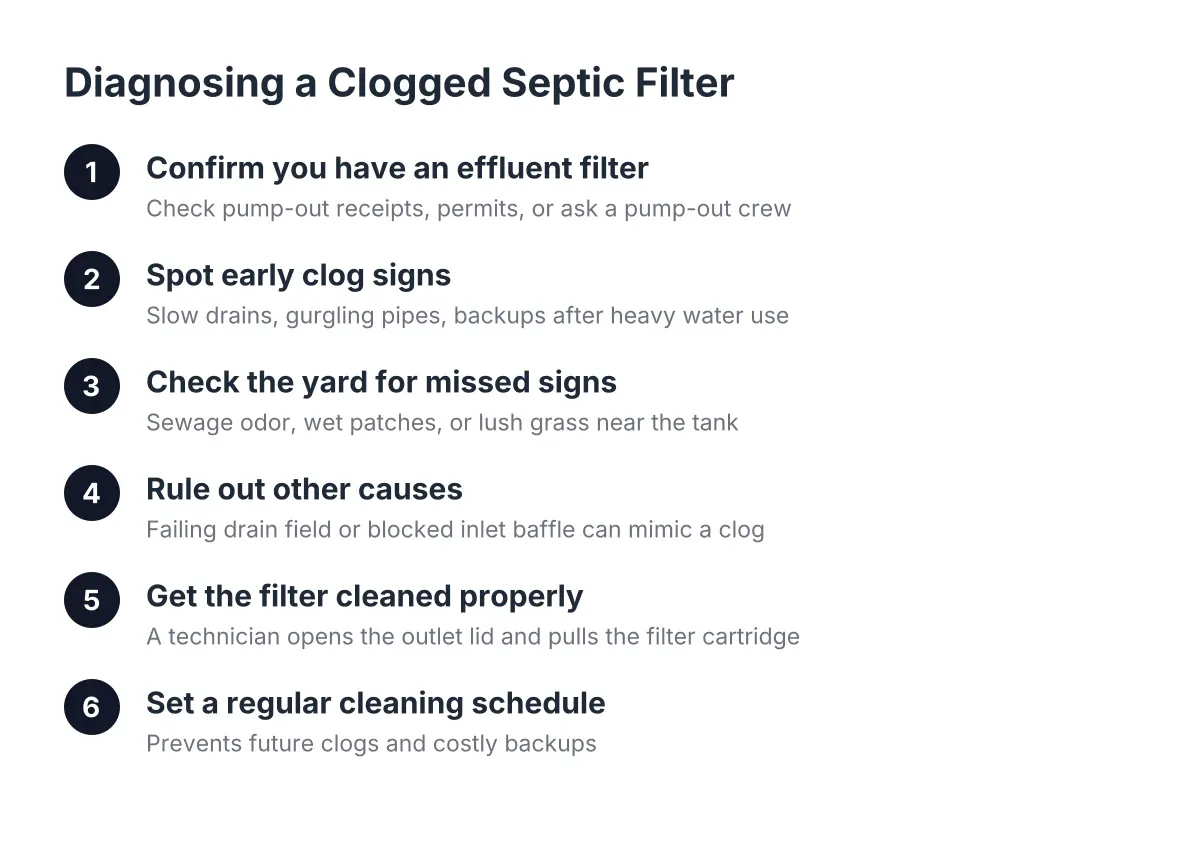
Step 1: Confirm Your System Has an Effluent Filter
Start by finding out whether your septic tank has a filter at all. Not every system does. Effluent filters became common in newer installations and are often added during a pump out, so a home built before 2000 may or may not have one. The filter sits inside the outlet baffle of the tank, where treated liquid exits toward the leach field.
Check three places for the answer:
- Your last pump-out or septic tank cleaning receipt, which often notes "cleaned filter" or "installed effluent filter"
- The septic permit or as-built drawing on file with the county health department
- A home inspection or septic system inspection report, if you are mid-transaction
However, if you cannot find paperwork, do not guess. A septic tank filter location question is easy for a local pump-out crew to answer during a routine visit; they open the outlet access lid and look. If your tank has no filter, the signs below still apply, but the fix points to the tank or the leach field instead.
Step 2: Spot Early Signs of a Clogged Septic Filter
The early signs of a clogged septic filter are slow drains throughout the house, gurgling sounds from toilets or tubs, and drains that back up briefly after heavy water use like laundry day. These symptoms show up in every drain at once, because the filter sits downstream of the whole house.
That last detail is your best diagnostic clue. One slow sink usually means a hair clog in that fixture. Every drain slow at the same time points to the tank, and often to the filter blocking the outlet. When a clogged filter prevents effluent from leaving the tank, the water level rises, and the whole plumbing system drains sluggishly.
For example, say a homeowner in Coral Gables notices the master shower pooling around her ankles on a Saturday morning after two loads of laundry. The kitchen sink gurgles when the washing machine drains. Nothing has fully backed up yet. In that scenario, the filter is a prime suspect, and a cleaning visit now costs a fraction of a sewage backup later.
Timing matters here too. According to the U.S. Environmental Protection Agency, regular septic maintenance runs about $250 to $500 every three to five years, while repairing or replacing a failed system can cost $5,000 to $15,000. Catching a dirty filter early keeps you on the cheap side of that math.
Step 3: When a Clogged Septic Filter Goes Unnoticed
Next, walk your yard. When a clogged septic filter has gone unnoticed for weeks, the trouble moves outdoors. Look for these:
- A sewage odor near the tank lids or over the leach field
- Standing water or a spongy, wet patch above the tank, even in dry weather
- Grass over the tank that is greener and taller than the rest of the lawn
- Wastewater surfacing near the tank rather than out over the drain field
Here is why the location of the wet spot matters. A clogged filter blocks the tank outlet, so water backs up at the tank itself. A failing leach field, by contrast, tends to show soggy ground spread across the field area. In South Florida, where the water table sits high and summer rain soaks everything, this distinction is harder to read, so treat any persistent wet spot near the tank as a reason to call for a septic system inspection.
If sewage is already backing up into the lowest drains in the house, stop running water immediately. No laundry, no dishwasher, short showers only. That buys you time until the tank can be opened.
Step 4: Rule Out the Other Common Causes
Before you assume the filter is the whole story, rule out the two problems that mimic it. When a septic system backs up, the most likely causes are a clogged effluent filter that needs cleaning or a drain field that is failing. A blocked inlet is the third suspect; according to Washington State Department of Health, a clogged inlet baffle is a common cause of septic backups and should be one of the first things checked.
Therefore, run through this quick logic:
- All drains slow, wet spot at the tank, no field-wide sogginess: filter or full tank is the likely cause.
- Drains fine indoors, but the leach field area stays wet and smells: the field itself may be struggling, and filter cleaning alone will not fix it.
- Only the line into the tank is blocked, with sewage backing up fast after any water use: check the inlet baffle for a scum blockage.
In addition, a filter that clogs again within weeks of cleaning is telling you something. Tanks that go many years without pumping build thick sludge and scum, and that debris loads the filter fast. In a two-chamber tank, skipping the back chamber during a pump out lets solids pile up right where the filter sits. Frequent filter clogs usually mean the tank needs a full septic tank pumping, not just another rinse of the cartridge.
Step 5: Get the Filter Cleaned the Right Way
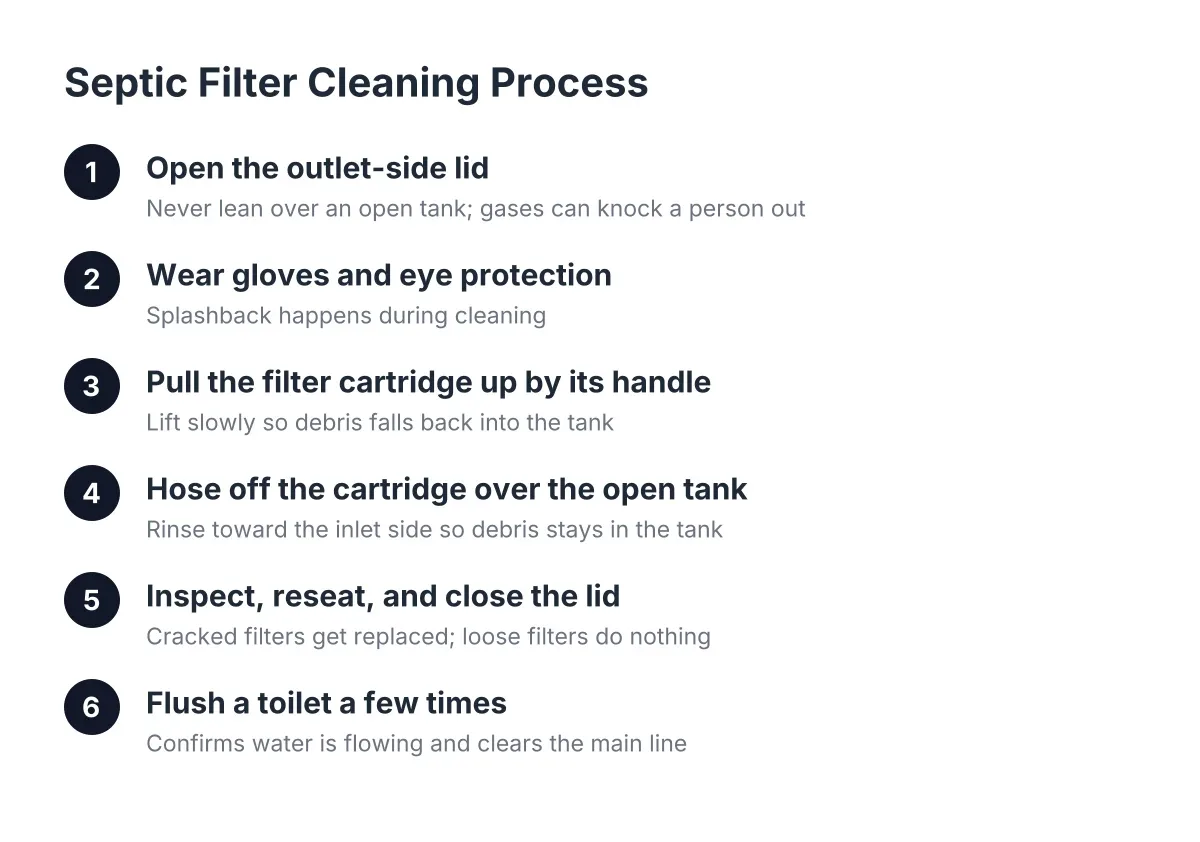
Cleaning an effluent filter is a short job, but it is a messy and hazardous one. The technician opens the outlet access lid, pulls the filter cartridge, hoses the trapped solids back into the tank, checks the housing, and reseats the filter. Afterward, flushing a toilet several times helps push anything left in the main line down into the tank.
Most Miami-area homeowners have this done as part of septic tank filter cleaning during a scheduled pump out, which is the smart pairing. If the crew is already on site emptying the tank, cleaning or replacing the filter adds little time. A cracked or degraded cartridge calls for a septic tank filter replacement, which is a standard part on most service trucks.
One honest caution: do not pull the filter yourself. Septic tanks release gases that can knock a person out in seconds, and an open lid is a fall hazard for kids and pets. If a filter clogs monthly even after a fresh pump out, that pattern points to an undersized tank, heavy water use, or a struggling leach field, and it deserves a professional diagnosis rather than repeated rinses.
Step 6: Set a Cleaning Schedule So It Never Clogs Again
The fix that lasts is a schedule. The U.S. Environmental Protection Agency recommends inspecting the entire septic system every 1 to 3 years and pumping the tank every 3 to 5 years. Penn State Extension notes that an active family of four should lean toward every two to three years because of higher solids and water use. Have the filter checked at every one of those visits, and once a year in between if your household is large.
Between visits, protect the filter by keeping solids out of the tank:
- No wipes, even ones labeled flushable
- No grease down the kitchen drain; for restaurants and rentals with commercial kitchens, a regular grease trap clean out does the same job on a bigger scale
- Spread laundry across the week instead of stacking loads in one day
- Skip additives that claim to replace pumping; they do not
Finally, if you are selling a septic-dependent home, get the tank pumped and the filter cleaned before the buyer's inspection, and keep the receipt. Suppose your closing is three weeks out and the buyer's inspector finds a high water level in the tank; a clogged septic tank filter discovered mid-deal creates exactly the kind of surprise that stalls a contract. A documented cleaning ahead of time turns that line item into a non-issue, and it protects more than your sale. According to the Florida Department of Environmental Protection, well-maintained septic systems help protect the groundwater that supplies 90% of Florida's drinking water.
A filter check takes minutes. A backup takes your whole weekend and part of your savings. Watch for the early signs, keep the schedule, and the filter will keep doing its quiet job of protecting your leach field for years.
If you need septic tank pumping, Miami Septic Tanks can help.
Prefer to talk it through? Call (786) 756-8032 — a quick call is usually the fastest way to get a straight answer for your situation.