Grease Trap Cleaning Frequency for Miami Restaurants: FAQ and Schedule Guide
If you run a commercial kitchen, a consistent grease trap cleaning schedule is not a guessing game you want to lose. Get it wrong and you face slow drains during dinner rush, odor complaints, a flagged health inspection, or a backup that closes the kitchen. This FAQ answers the questions Miami-area restaurant operators ask most, so you can put your trap on a set schedule and stop thinking about it between visits.
How Often Should a Restaurant Grease Trap Be Cleaned?
Most restaurant grease traps need cleaning every one to three months, depending on trap size and how much fried or greasy food you produce. A high-volume kitchen with fryers and grills often needs monthly service. A lighter cafe may stretch to quarterly. The safest rule is the one many municipalities use: clean the trap before grease and solids fill 25 percent of its capacity.
That 25 percent mark, often called the quarter rule, exists because a trap past that point stops separating grease from water. At that stage, grease flows straight into the sewer line or septic system, which is exactly what inspectors and city codes are trying to prevent.
If your kitchen runs on a septic system, the schedule matters even more. Inside a septic tank, fats, oils, and grease float and form a scum layer on top while solids sink to the bottom, according to the U.S. Environmental Protection Agency. A neglected trap sends grease downstream and thickens that scum layer fast.
What Drives Your Grease Trap Cleaning Schedule?
Grease trap cleaning frequency depends on four things: trap size, menu type, sales volume, and local code requirements. A small under-sink trap at a busy fry-heavy restaurant fills far faster than a large outdoor interceptor at a salad-focused spot. Your first two or three cleanings will show you the real fill rate.
Here is how each factor plays out:
- Trap size. Smaller indoor traps fill in weeks. Large in-ground grease interceptors may go a few months between pump outs.
- Menu. Fryers, flat tops, and meat-heavy menus load the trap fast. Miami kitchens turning out croquetas, chicharrón, or fried snapper know this well.
- Volume. More covers means more dishwashing, more pre-rinse grease, and a faster fill rate.
- Local rules. Many jurisdictions set a maximum interval regardless of fill level, so check what Miami-Dade requires for your permit.
For example, suppose a hypothetical Little Havana restaurant runs two fryers through lunch and dinner six days a week. In that scenario, a typical service company would likely recommend monthly grease trap clean outs, then adjust after checking fill levels at the first two visits.
How Do You Know When a Grease Trap Needs Cleaning?
A grease trap needs cleaning when grease and solids reach a quarter of its depth, or sooner if you notice slow drains, gurgling, or a sour smell near the kitchen floor drains. Waiting for symptoms is risky, though. By the time you smell it during service, the trap is usually well past due.
Watch for these warning signs between scheduled cleanings:
- Sinks and floor drains that empty slowly, especially during the dinner rush
- A rotten or sour odor near drains, the dish pit, or the trap itself
- Visible grease in the trap's secondary compartment
- Grease backing up into sinks or appearing around outdoor drain covers
However, the goal of a set schedule is to make these signs rare. If you are spotting them regularly, your grease trap cleaning frequency is too long for your kitchen's output, and the interval should tighten.
Is a Recurring Cleaning Schedule Better Than One-Off Calls?
A recurring grease trap cleaning schedule beats one-off calls for almost every working restaurant. On a schedule, the service arrives before the trap hits the danger zone, your service records stay current for inspectors, and you never have to chase a vendor while drains back up mid-shift. One-off calls tend to happen after a problem starts, which is the expensive way to do it.
There is a real trade-off to weigh. A recurring plan is a predictable line item, while one-off cleanings feel cheaper in slow months. But an emergency clean out during a backup, plus lost covers if you close for even half a shift, usually costs more than a year of scheduled visits.
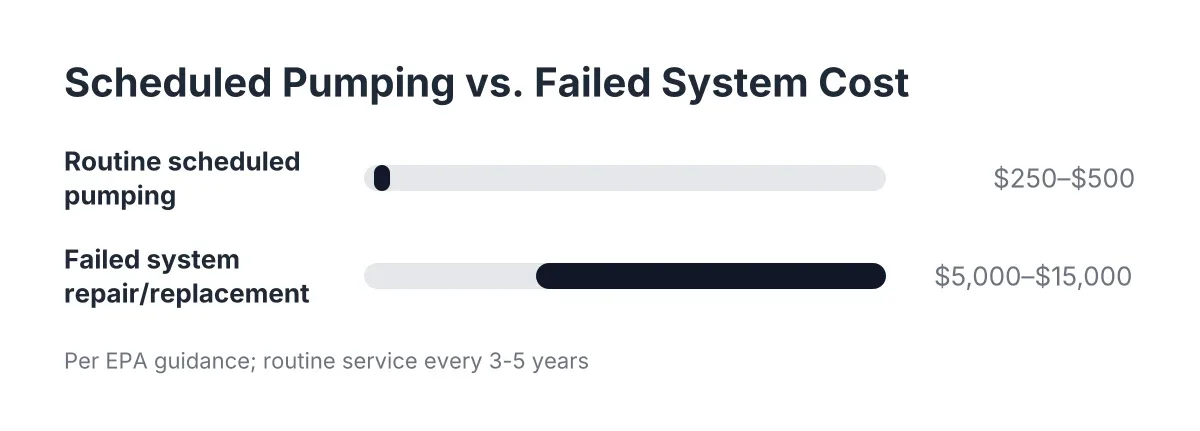
The same logic applies to the rest of your system if you are on septic. The EPA recommends inspecting the entire septic system every 1 to 3 years and pumping the tank every 3 to 5 years, and notes that maintenance fees of $250 to $500 every three to five years are a bargain next to repairs that can run $5,000 to $15,000. A septic maintenance schedule and a grease trap schedule work the same way: small, planned costs instead of one large, unplanned one.
Can Grease Trap Service Be Scheduled Around Business Hours?
Yes, most grease trap cleaning can be scheduled outside your service hours, typically in the morning before open or after close. A standard clean out on an accessible trap takes well under an hour in most cases. Tell the service company your prep and service windows up front, and lock the visit into the same time slot each cycle.
In addition, ask what a visit includes before you commit. A proper grease trap clean out means fully pumping the trap, scraping the walls and baffles, checking the inlet and outlet, and hauling the waste away legally. A vendor who only skims the surface grease leaves solids behind, and the trap fills again in half the time.
What Records Do Health Inspectors Want to See?
Inspectors typically want a written log showing each cleaning date, who performed it, and where the grease went. Many operators keep a grease trap cleaning schedule form or simple template near the trap or in the office binder. Missing records can turn a routine inspection into a flagged one, even if the trap itself looks fine.
Keep it simple:
- Log every cleaning with the date and the service company's name
- Keep manifests or receipts showing legal disposal
- Note the fill level at each visit so you can adjust the interval
- Store at least a year of records where a manager can grab them fast
Requirements vary by municipality, so confirm the exact record-keeping rules with your local authority; when in doubt, ask a professional service or your inspector directly.
Does the Grease Trap Schedule Change if the Restaurant Is on Septic?
Yes. A restaurant on a septic system usually needs a tighter grease trap cleaning frequency and more frequent tank pump outs than a home. Commercial systems handle heavy restroom traffic and constant kitchen wastewater, so solids and grease build faster than residential guidelines assume.
This is a live issue locally. There are approximately 120,000 septic systems in Miami-Dade County across residential and commercial areas, according to Miami Waterkeeper. If your building is one of them, pair the trap schedule with regular septic tank pumping and septic tank filter cleaning, and have the leach field checked during inspections. University of Florida IFAS notes that tanks pumped every three to five years, with proper maintenance, can last up to 30 years.
One caution: skip the additives sold as a substitute for pumping. Commercial septic additives marketed to dissolve sludge lack strong scientific backing, according to Washington State University Extension. Nothing replaces physically removing the grease and solids.
How Do You Set Up a Recurring Plan That Actually Sticks?
Setting up a recurring grease trap plan takes one honest baseline cleaning and two follow-up checks. Start with a full clean out, have the technician note the fill level, then measure again at the next visit. That fill rate tells you the right interval, and from there the schedule runs itself.
Follow these steps:
- Book a full clean out and ask for the measured fill level in writing.
- Set a starting interval based on that level and your local code maximum.
- Recheck at the next two visits and tighten or loosen the interval as needed.
- Put the visits on a standing calendar so no one has to remember to call.
- Review the schedule once a year, or after any menu change that adds fryers or volume.
Therefore, the operator who wins here is not the one who reacts fastest to a backup. It is the one who never gets the backup, passes inspection without scrambling for paperwork, and treats the grease trap like any other piece of kitchen equipment on a maintenance calendar. Set the schedule once, and let it run.
If you need septic tank pumping, Miami Septic Tanks can help.
Prefer to talk it through? Call (786) 756-8032 — a quick call is usually the fastest way to get a straight answer for your situation.