How Much Does Septic Tank Pumping Cost?
How much does septic tank pumping cost? The honest answer depends on three things: the size of your tank, how full and how neglected it is, and how easy it is for a truck and hose to reach it. Anyone who quotes you a firm number before knowing those things is guessing. This guide walks through each factor that moves your septic tank pumping cost up or down, so you can read a quote and know whether it is fair. By the end, you will know exactly what to tell a local company to get a real number for your Miami-area home or business.
What Drives the Cost of Septic Tank Pumping
Every legitimate quote comes down to a handful of physical facts about your system. Here are the ones that matter.
Tank Size
Bigger tanks hold more waste, and pumping is priced largely on volume. A small tank under an older two-bedroom house takes less time and less truck capacity than a large tank serving a big family home or a commercial property. If you do not know your tank size, check your county property records or the paperwork from when the system was installed or last inspected. A local septic company can also look it up or measure it during the visit. When in doubt, tell the provider your home's bedroom count and bathroom count — that gives them a solid starting estimate of the size. A pump out for homes and businesses gets priced differently for a reason: commercial tanks and grease traps are often larger and dirtier.
How Full the Tank Is, and What Is in It
A tank pumped on a regular schedule holds mostly liquid, which pumps fast. A tank that has gone years without service builds a thick sludge layer on the bottom and a hardened scum layer on top. Breaking up and removing that material takes more time, more effort, and sometimes extra water to loosen it. What is in the tank matters too: a tank full of grease, wipes, or heavy sludge takes more effort than one with normal household waste, and homes with garbage disposals — or businesses without a grease trap clean out schedule — tend to land on the harder side. You often will not know the condition until the lid comes off, which is one reason quotes carry some flexibility. If you cannot remember the last pump out, plan for the higher end of any estimate you get. Sticking to a regular septic maintenance schedule keeps each visit routine, and routine visits cost less than rescue visits.
Access to the Tank
The truck needs to park close enough for the hose to reach, and the crew needs to open the tank lid. If your lid sits under a foot of soil, a deck, pavers, or landscaping, someone has to dig or dismantle before the pumping even starts. That digging is labor, and labor is money. If the truck cannot park close, longer hose runs slow the job down too. If you have no idea where the tank is, mention that when you call, because locating it is part of the job. Installing a riser, which is a simple extension that brings the lid to ground level, is a one-time expense that lowers the cost of every future visit. Walk your yard and see what is between the street and your tank. That tells you which side of this factor you are on.
Extra Services Rolled Into the Visit
Pumping empties the tank. Septic tank cleaning goes further and washes down the walls and baffles. Septic tank filter cleaning clears the outlet filter that protects your leach field. A septic system inspection checks the whole setup for problems. Each add-on raises the invoice, but skipping the right ones can cost more later. A clogged filter left dirty can back sewage into your house. Bundling can also save money compared to separate trips, since the crew is already on site with the tank open. Ask what is included in the base price and what costs extra — and ask for both prices so you can compare — then decide what your system needs this visit.
Condition of the Rest of the System
Sometimes a pump out reveals a bigger problem: a cracked baffle, a failing pump, or a soggy leach field. Those repairs are separate line items, not part of the pumping price. Leach field repair in particular runs well beyond a routine service call because it involves excavation. A septic system inspection is the cheapest way to find out which category you are in before you commit to anything. The good news is that regular pumping is the cheapest insurance against ever needing that conversation.
Location, Property Type, and Scheduling
A tank in the Miami area with normal road access costs less to service than one at the end of a long private drive or behind a locked gate the crew has to wait on. A property well outside a company's normal route may carry a travel charge, while a home near their regular service area usually will not. Haulers also pay to dispose of septage legally, and that cost is baked into local pricing. Miami-area soil, water tables, and county rules shape how jobs run here, which is one reason quotes from national directories that route your call out of state rarely match what you actually pay. A home pump out and a commercial job are different animals too: restaurants and other businesses often need grease trap clean out on top of septic service, and commercial tanks tend to be larger and on tighter schedules. Timing matters as well. A routine appointment you book ahead is the standard rate. An urgent call because sewage is backing up into your shower puts you in a worse negotiating position and often at the top of the price sheet.
Cost Factor Table
| Factor | Pushes the price down when… | Pushes it up when… |
|---|---|---|
| Tank size | The tank is small and serves a modest household | The tank is large or serves a business or big family home |
| Time since last pump out | You pump on a regular schedule and the contents are mostly liquid | Years of buildup have left thick sludge and hardened scum |
| Tank access | The lid is at ground level or has a riser, with easy truck access | The lid is buried, paved over, or far from where the truck can park |
| Tank condition | Normal household waste, no grease or wipes buildup | Heavy sludge, grease, or debris that slows the job |
| Services included | You need a straightforward pump out only | You add tank cleaning, filter cleaning, or a full inspection |
| System condition | Everything is intact and working | The visit uncovers baffle, pump, or leach field problems |
| Property type | It is a standard residential job on a normal route | It is commercial, includes a grease trap, or sits outside the usual area |
| Scheduling | You book a routine appointment in advance | You call with an active backup and need someone now |
Pumping Cost vs. Repair Cost: The Math That Matters
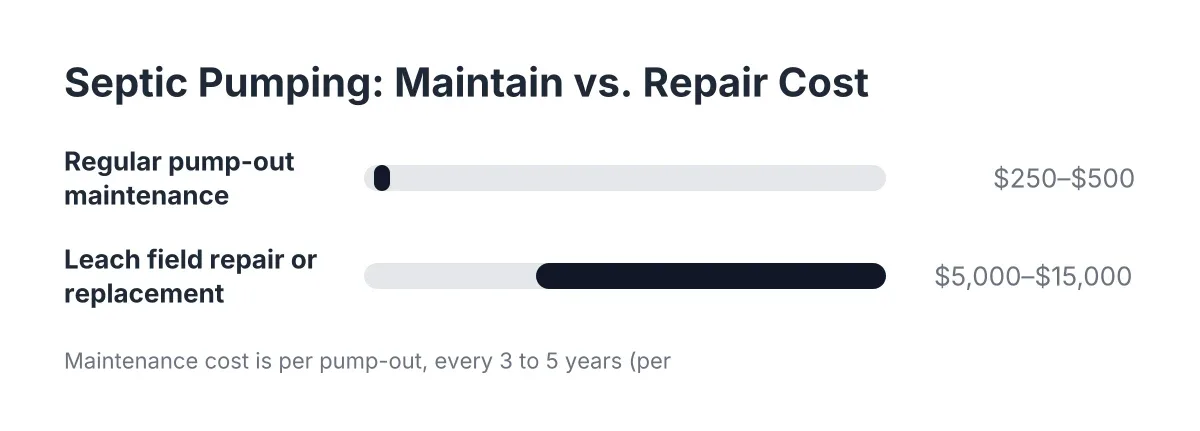
Routine septic tank pumping costs are small compared to the cost of fixing a failed system. According to the U.S. Environmental Protection Agency, regular septic maintenance fees of $250 to $500 every three to five years are a bargain next to repairing or replacing a malfunctioning system, which can run $5,000 to $15,000. Spread over five years, routine pumping works out to less than the cost of a monthly streaming bundle; a failed leach field can cost as much as a used car.
Solids belong in the tank, where a pump out can remove them. Once they migrate into the leach field lines, no pump truck can pull them back out. At that point you are paying for excavation, not maintenance. There is also a lifespan argument: University of Florida IFAS notes that with proper maintenance, septic tanks can last up to 30 years. Skipping pump outs does not just risk a backup this year; it shortens the working life of a system that costs serious money to replace.
How Often Should You Pump, and What Does That Mean for Your Budget?
Most septic tanks in the Miami area should be pumped every three to five years, which matches guidance from University of Florida IFAS and the EPA, which also recommends an inspection of the entire septic system every 1 to 3 years. Your real interval depends on tank size, household size, and water habits: a retired couple with a properly sized tank might stretch to five years, while a family of six running laundry daily might need service every two to three years.
South Florida adds its own wrinkle. Our high water table and heavy rainy season put extra stress on tanks and leach fields. A tank that is already overdue for a pump out is far more likely to back up during a wet summer than in the dry months, and an emergency call costs more than a planned one. There is real scale to this locally: according to Miami Waterkeeper, there are about 120,000 septic systems in Miami-Dade County and about 2,600,000 septic tanks across Florida.
If you do not know when your tank was last pumped, check receipts from prior owners, ask the seller or their agent for service records, contact local septic pump out companies who may have the address on file, or check with the county health department for permit and service history. If none of that turns up a date, treat the tank as overdue and budget for the higher end of any estimate.
How to Get an Accurate Septic Tank Pumping Estimate
You can get a solid quote over the phone if you have the right facts ready. Before you call, gather:
- Tank size, from installation records, a past invoice, or county permit records — or the number of bedrooms and bathrooms in your home as a rough stand-in.
- Date of the last pump out, even a rough guess like "about five years ago."
- Lid location and depth, including whether it sits under grass, soil, pavers, or a deck — or whether you do not know where the tank is at all.
- Where a truck can park, and roughly how far that is from the tank.
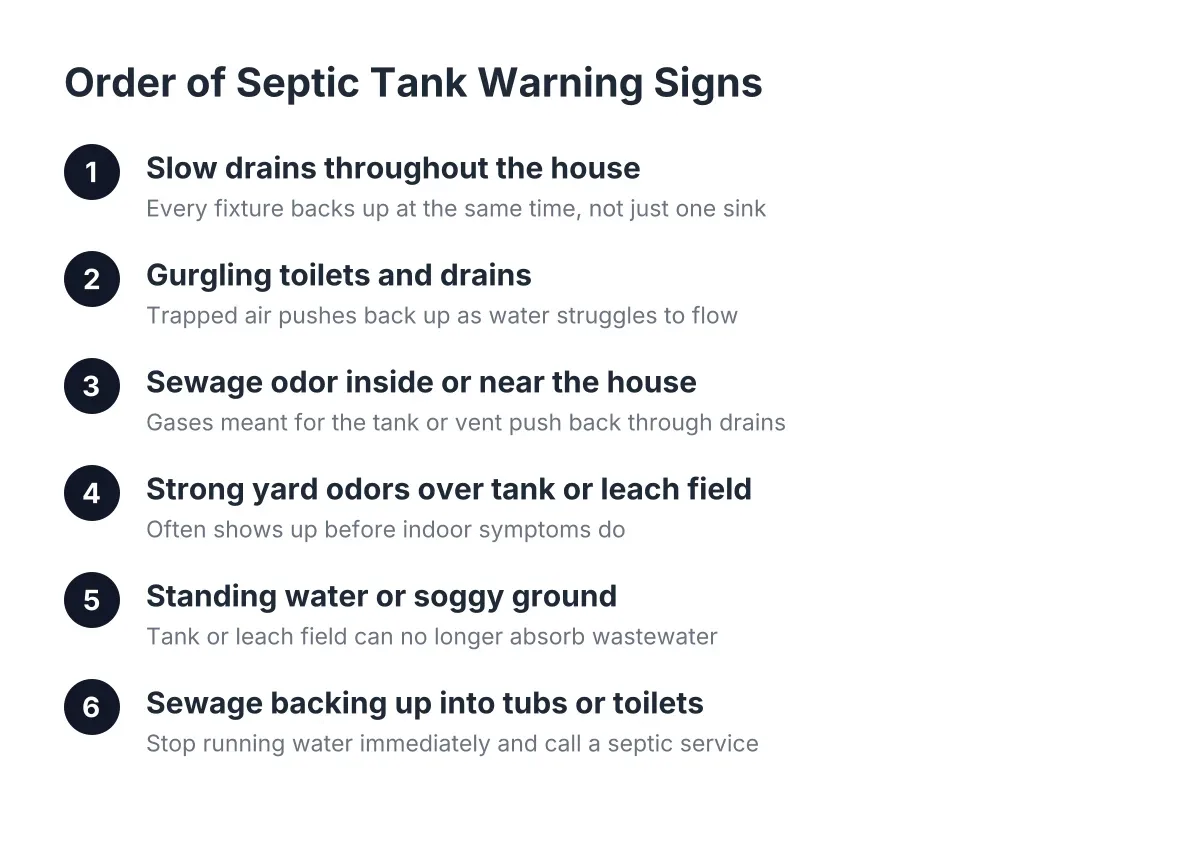
- Any symptoms, like slow drains, gurgling, odors, or wet spots over the leach field — or nothing at all, just routine maintenance.
- What you want done: a pump out only, a full septic system cleaning, filter cleaning, or an inspection.
A good quote spells out what is included: the pumping itself, digging to reach the lid, filter cleaning, and disposal of the waste. It also flags what could add to the bill, like extra digging, a fuller tank than expected, or what happens if the crew finds a problem. If a quote is one vague number with no breakdown, ask questions until you get one. A provider who cannot explain the number probably has not thought hard about your job. A few direct questions sort good operators from the rest, and clear answers are the trust signal you are looking for:
- What does the base pump out price include, and what triggers extra charges?
- Is digging to reach the lid included, or billed separately?
- Does the visit include a look at the baffles and filter, or is inspection a separate service?
- Will you get written documentation of the service and any problems found?
- Can they put you on a recurring reminder schedule for the next pump out?
Estimates differ between providers for real reasons. One company may include filter cleaning in the base price while another bills it separately. One may charge a flat rate up to a certain tank size while another prices by the gallon. Some quotes assume the lid is exposed, and others build in digging time. Disposal fees at the treatment facility vary too, and those get passed along. When two quotes are far apart, the difference is usually in what each one includes, not in one company being dishonest. That is why a cheap quote is not always the cheap job, and why comparing two or three quotes line by line beats comparing bottom-line numbers. When you call local companies, ask each one the same questions so you compare the same work. If you want a local starting point, our septic tank pumping service in Miami page explains what a visit involves.
What You Are Paying For: The Visit, Step by Step
Knowing the process helps you read an itemized quote. A standard septic tank pump out in the Miami area follows the same basic steps:
- Locate the tank. The technician finds the tank and its access lid. If you have a site drawing or septic tank design records from the county, this step goes faster.
- Open and assess. The crew opens the lid and checks the sludge layer, the scum layer, and the liquid level. High liquid can point to a drain field problem; low liquid can point to a leak.
- Pump the tank. A vacuum hose removes liquids and solids. A thorough job removes the sludge at the bottom, not just the easy liquid on top.
- Check components. The technician looks at the baffles and the outlet filter. Septic tank filter cleaning at this stage prevents the most common cause of slow drains between pump outs.
- Note any concerns. You should hear about cracks, root intrusion, a sagging baffle, or signs the leach field is struggling, before they become emergencies.
- Close up and document. You get a record of the service. Keep it. It matters at resale, and it is the first entry in your maintenance file.
The whole visit usually takes about an hour for a straightforward residential job. If the lid needs digging or the tank is badly overdue, plan for longer. One honest caveat: a pump out is maintenance, not a cure. If your drain field has already failed, pumping the tank buys you days, not years, and you should have a professional evaluate the leach field before spending more money on pumping alone.
Ways to Keep the Cost Down
You cannot change the size of your tank, but you can control plenty of what ends up on the invoice.
Pump on a schedule, not in a crisis. Routine septic tank pumping every few years keeps the contents easy to remove and keeps solids out of your leach field. The expensive version of this service is the emergency version, and the catastrophic version is a failed leach field. Regular service avoids both. When you get your tank pumped, ask the company to put you on their reminder list for the next service — good local companies do this as a matter of course, so you never have to remember the date yourself.
Expose the lid yourself. If your tank lid sits under soil or sod, digging it up before the crew arrives saves billable labor. Better yet, ask about a riser so no one ever digs again.
Bundle smart, not blindly. If the truck is already there, adding septic tank filter cleaning or an inspection costs less than a separate trip later. But do not pay for add-ons your system does not need. Ask why each item is recommended. Filter cleaning is a small line item; a leach field ruined by years of escaped solids is a major one. Small maintenance protects you from the big bill.
Compare two or three local quotes with the same scope. Septic pump out companies in the Miami area price differently, and a ten-minute phone call with your tank details gets you a real number from each. Tell each company the same details and ask for the same work, so differences in price reflect real differences, not different jobs. Searching "septic cleaner near me" and calling the first result works, but calling three local providers and comparing line items teaches you the fair local range without anyone inventing a number for you. Skip national directories that route your call out of state; a local dispatcher who knows the area gives straighter answers.
Watch what goes down the drain. Grease, wipes, harsh chemicals, and heavy garbage disposal use fill a tank faster, stress the system, and make each cleaning harder. A tank that fills slower needs pumping less often, which lowers what you spend per year — and a tank treated well costs less every single time it gets serviced. Fixing running toilets and spreading laundry across the week helps too. In a restaurant or commercial kitchen, staying on top of grease trap clean out service keeps that separate system from becoming its own expensive problem.
Keep the paperwork. Keep a simple folder, paper or digital, with every receipt, inspection report, and any septic tank design or permit records you have. When you eventually sell the house, that folder answers the buyer's inspector before the questions get asked.
Pumping Costs Around a Home Sale
Pumping the tank before listing a septic home in the Miami area is usually money well spent, for two reasons. First, an inspector cannot fully evaluate a tank that is full; pumping it allows a real look at the baffles, walls, and outlet. Second, a fresh pump out receipt is a trust signal that calms nervous buyers. A seller who can hand over a dated pump out receipt and inspection report removes a whole category of doubt from the deal; a seller who shrugs invites the buyer to assume the worst and negotiate accordingly.
For buyers, the advice flips. Do not accept "the tank was just pumped" as proof the system is healthy. A pump out empties the tank; it does not certify the drain field. Ask for an actual septic system inspection, and ask what the technician saw when the tank was open. If an inspection turns up a problem, get specifics before you panic: a clogged outlet filter is a minor fix, a cracked lid is a modest one, and a saturated leach field is a major negotiation item that sits in a different budget category than pumping.
Cost Questions People Ask
Is septic tank cleaning the same as pumping, and does it cost more?
Pumping removes the liquid and loose solids. Cleaning goes further, washing down the tank walls and baffles and removing stuck-on buildup like the stubborn scum and sludge layers. Cleaning takes more time, so it costs more than a basic pump out, but it leaves the tank in better shape and can stretch the time before your next service. A tank that has gone years without service may need it. Many homeowners alternate, doing full septic system cleaning every few visits and basic pumping in between.
What is the cost of septic tank replacement compared to pumping?
Replacement is a different category entirely. It involves excavation, a new tank, permits, often leach field work, and frequently landscaping repair afterward, so it costs many times more than routine pumping. Pumping sits at the low end of septic spending, repairs like fixing a baffle or a filter sit in the middle, and leach field repair and full replacement are the big-ticket items. That gap is the strongest argument for regular pump outs: they are the cheap habit that delays or prevents the expensive project.
What about the cost of septic pump replacement?
Some systems use an electric effluent or lift pump to move wastewater uphill or into the drain field. Replacing that pump is a repair job with a parts-plus-labor price, separate from pumping the tank — it falls between routine pumping and full tank replacement on the price scale. The price depends on the pump type, how deep it sits, how hard it is to reach, and any electrical work involved. A septic system inspection during your regular service can catch a struggling pump before it dies, which gives you time to plan instead of paying rush prices.
Why do septic pumping cost estimates vary so much between companies?
Different companies include different things in the base price, pay different disposal fees, and price by flat rate or by volume. One number might mean pumping only, while another includes full tank cleaning, a filter check, and disposal fees. Access, travel distance, and tank condition shift things too, which is why a Miami-area quote from a local provider beats a generic figure from a national site. Get each quote in writing with a breakdown, then compare the line items instead of just the totals — the gap usually explains itself.
Do businesses pay more than homeowners?
Usually, yes. Commercial tanks tend to be larger, get heavier use, and need service more often. Restaurants also need grease trap cleaning on a regular cycle, which is a separate service from the septic tank itself. A local company that handles septic pump out for homes and businesses can quote both together, which is worth asking about.
The Bottom Line
The cost of septic tank pumping comes down to your tank's size, its condition, and how easy it is to reach; everything else is detail on the quote. No honest number exists until someone knows those details about your property. Gather your tank facts, call two or three local Miami-area providers, make sure each quote covers the same scope, and compare itemized quotes instead of vague totals. A routine pump out booked on your schedule will always beat the price of the emergency you were trying to avoid — and a few hundred dollars of maintenance every few years will always beat a five-figure repair.
If you need septic tank pumping, Miami Septic Tanks can help.
Prefer to talk it through? Call (786) 756-8032 — a quick call is usually the fastest way to get a straight answer for your situation.