Leach Field Repair Terms Explained: A Plain-English Glossary
If you own a home on a septic system, sooner or later a contractor will hand you a quote full of words you have never seen. This leach field repair glossary breaks those terms into plain English so you can read an estimate line by line, ask better questions, and spot a problem before it turns into a soggy yard. It is written for Miami-area homeowners and property managers, but the terms work the same anywhere. Keep it open the next time a provider starts talking about laterals, biomat, or perc tests.
- Leach Field (Drain Field)
- Septic Tank
- Distribution Box (D-Box)
- Lateral Lines
- Effluent
- Effluent Filter
- Baffle
- Biomat and Leach Field Damage
- Hydraulic Overload
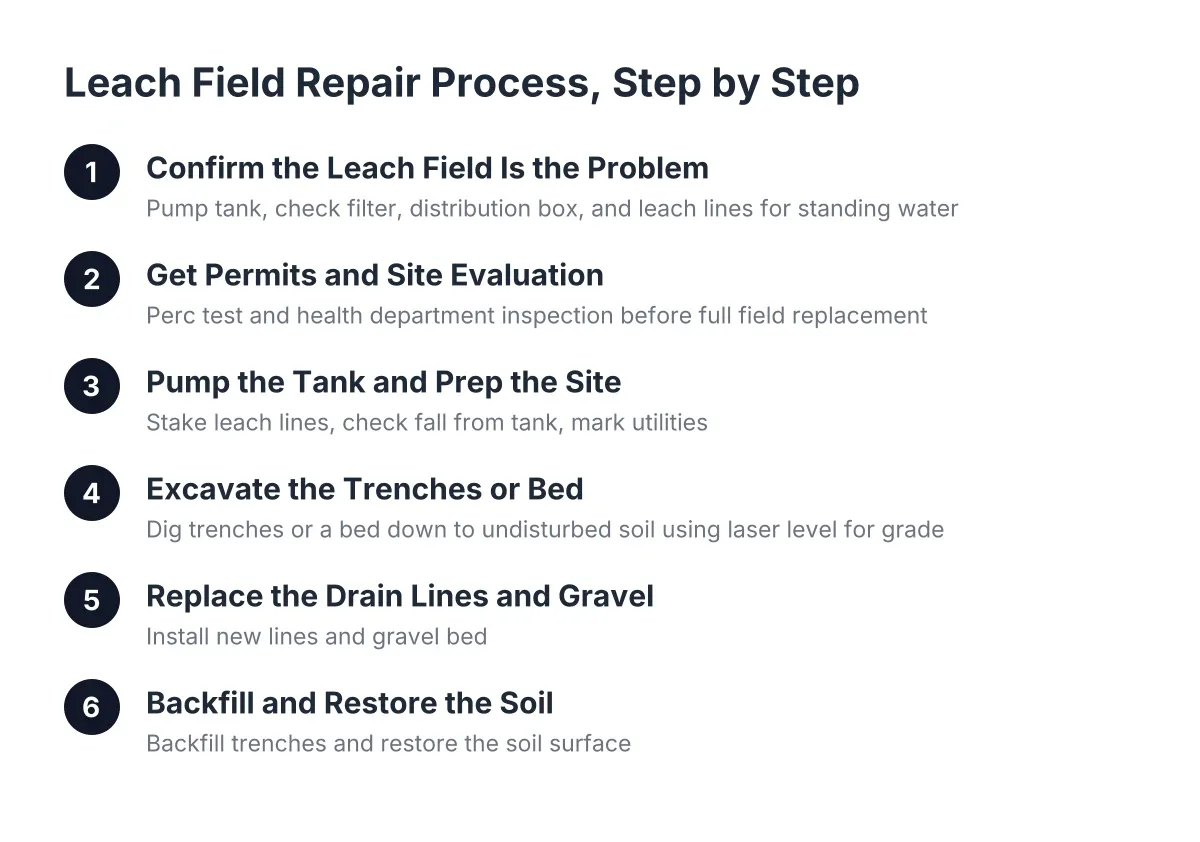
- Perc Test (Percolation Test)
- Septic System Inspection
- Sewage Backup
- Septic Tank Pumping (Pump Out)
- Septic Tank Cleaning
- Jetting (Hydro-Jetting)
- Grease Trap Clean Out
- What Are the 3 Types of Septic Systems
- Permit
The Parts of Your Septic System
Leach Field (Drain Field)
A leach field is the network of buried pipes and gravel trenches that spreads treated wastewater from your septic tank into the soil. Some contractors call it a drain field or absorption field; they all mean the same thing. It is the part of your system most likely to fail from age, root damage, or years of skipped septic tank pumping. When a provider talks about repairing it, ask which trenches are affected, because the answer shapes the whole scope of the job. If you are not sure whether yours is in trouble, this checklist of signs your leach field is failing covers the wet spots, odors, and backups to watch for.
Septic Tank
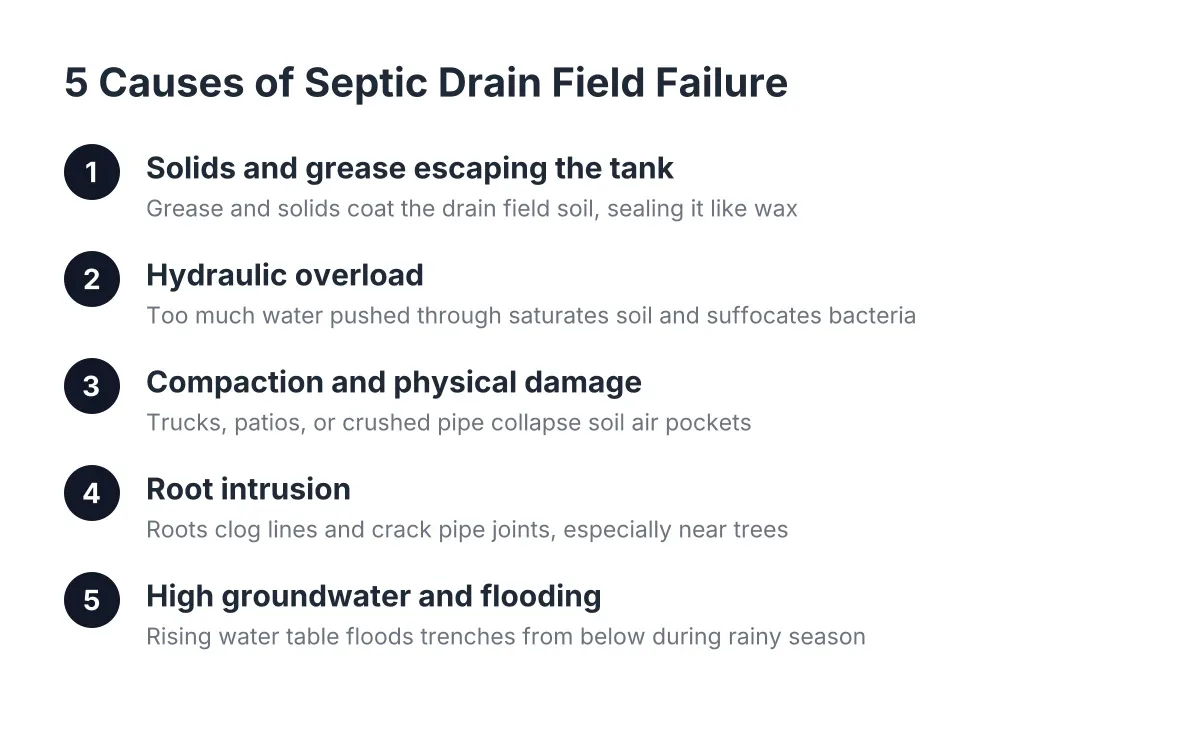
A septic tank is a buried, watertight container that holds household wastewater long enough for solids to settle to the bottom and grease to float to the top. The liquid in the middle flows out to the leach field. A tank that never gets a pump out sends solids downstream, and that is one of the most common reasons a leach field fails early. Regular septic tank pumping is the cheapest insurance your drain field will ever get.
Distribution Box (D-Box)
A distribution box is a small concrete or plastic box that splits the flow from your septic tank evenly among the leach field trenches. When a d-box cracks, tilts, or clogs, one trench takes all the water and floods while the others sit dry. Repairing or leveling a d-box is one of the smaller fixes in the leach field world, so hearing this term in a quote is usually good news for your budget.
Lateral Lines
Lateral lines are the perforated pipes that run through each leach field trench and let wastewater seep into the soil. Contractors may also just call them laterals. A quote that mentions replacing one or two laterals means a targeted fix; a quote that replaces all of them is closer to a full rebuild. Ask how many lines your field has and how many are affected.
Effluent
Effluent means the liquid wastewater that leaves your septic tank after the solids settle out. It is not clean water, but it is clear enough for soil to finish treating it. When effluent shows up on the surface of your lawn, the soil below has stopped accepting it, and that is a classic sign the field needs attention.
Effluent Filter
An effluent filter is a screen inside the septic tank outlet that catches small solids before they reach the leach field. It protects the field, but it clogs over time and needs cleaning. Septic tank filter cleaning is a quick, low-cost service, and skipping it lets solids slip into the field where they do lasting damage. If a provider mentions your tank has no filter, adding one during a repair is a smart upgrade to ask about.
Baffle
A baffle is a fitting inside the septic tank that directs flow and keeps floating scum from escaping into the leach field. Baffles crack and rot out over the years, especially in older concrete tanks. A broken outlet baffle quietly feeds grease and solids into the field, so inspectors check it on nearly every visit.
Problems and Diagnosis
Biomat and Leach Field Damage
Biomat is a black, tar-like layer of bacteria and waste that builds up on the soil at the bottom of leach field trenches. A thin biomat is normal and even helps treat wastewater. A thick one seals the soil so water cannot soak in, which sends effluent back up toward your lawn or house. When a contractor says your field is "biomat-clogged," they are telling you the soil, not the pipes, is the problem.
Hydraulic Overload
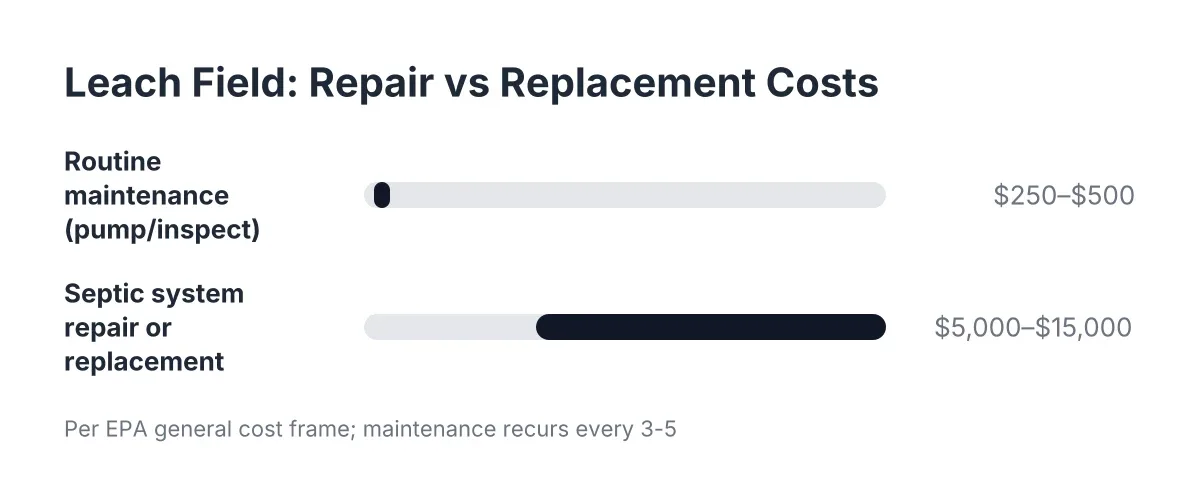
Hydraulic overload means more water is entering the septic system than the leach field can absorb. Long laundry days, leaky toilets, and heavy rain can all cause it. It matters because an overloaded field can show failure symptoms even when nothing is broken. Before you pay for a repair, a good provider will rule out overload first, since cutting water use is free and digging is not. The comparison in leach field repair vs. replacement walks through when a fix makes sense and when it does not.
Perc Test (Percolation Test)
A perc test measures how fast water soaks into your soil by timing how quickly a test hole drains. Contractors and health departments use it to decide whether your soil can support a leach field and how big that field needs to be. If your repair quote includes a perc test, the provider is checking whether your existing soil can still do the job. Slow-draining soil pushes the project toward bigger, costlier designs.
Septic System Inspection
A septic system inspection is a checkup where a provider opens the tank, checks levels, tests flow to the field, and looks for damage. It tells you what is actually wrong before anyone quotes a repair. Buyers ordering one before closing on a Miami-area home can avoid inheriting a failing field. If a company quotes a major repair without any inspection, that is a reason to slow down and ask questions.
Sewage Backup
A sewage backup is wastewater flowing the wrong way, into your tubs, toilets, or floor drains, because the system cannot push it out. A backup can mean a full tank, a clogged pipe, or a saturated leach field. The fix ranges from a simple septic tank pump out to field work, so do not assume the worst until someone has looked in the tank.
Repairs, Services, and Paperwork
Septic Tank Pumping (Pump Out)
Septic tank pumping means removing the built-up solids and liquid from your tank with a vacuum truck. Providers also call it a pump out. It is routine maintenance, not a repair, but it is often the first step in diagnosing a field problem because an empty tank shows whether water flows back in from a flooded field. Skipping pump outs for years is the most preventable cause of leach field failure.
Septic Tank Cleaning
Septic tank cleaning goes a step beyond pumping by removing the stuck-on sludge and scum from the tank walls and floor, not just the liquid on top. A pump out empties the tank; cleaning scrubs it. If a quote lists both, the provider plans a thorough job, which helps an inspector see cracks and baffle damage clearly.
Jetting (Hydro-Jetting)
Jetting is cleaning pipes with a high-pressure stream of water to blast out grease, sludge, and roots. In leach field work, jetting the lateral lines can restore flow when the pipes are clogged but the soil is still healthy. It is far cheaper than digging, so it is worth asking whether your field is a candidate before agreeing to excavation.
Grease Trap Clean Out
A grease trap clean out is the removal of built-up fats, oils, and grease from the trap that sits between a kitchen and the septic or sewer line. Restaurants and other commercial kitchens need it on a regular schedule. Grease that escapes a full trap hardens in pipes and soil, and grease is one of the fastest ways to ruin a leach field. If you manage a Miami-area property with a commercial kitchen, keep the grease trap cleaning schedule as tight as the pump out schedule.
What Are the 3 Types of Septic Systems
The three main types of septic systems are conventional gravity systems, pressure distribution systems, and alternative or aerobic treatment systems. A gravity system lets wastewater flow downhill from tank to field with no pump. A pressure distribution system uses a pump to push effluent evenly through the field, which helps on flat or tight lots. Alternative systems, including aerobic treatment units and mound systems, add extra treatment steps for difficult soil or high water tables. Knowing your type matters because repair options and costs differ for each; the breakdown in how much leach field repair costs shows how system type shapes the bill.
Permit
A permit is written approval from your local health or building department to repair or replace part of a septic system. Most significant leach field work requires one, and the provider usually pulls it. A quote that includes permit fees is a sign the contractor plans to do the job by the book. Check your local code, because rules vary by county.
Using These Terms
You now have the working vocabulary that septic pump out companies and repair crews use every day. Understanding the language of field repair and maintenance lets you communicate clearly with contractors and ask informed questions about your system. Read your next quote line by line, and when a term does not match what this glossary says, ask the provider to explain the difference. A local Miami-area contractor who knows the work will be glad you asked.
If you need septic tank pumping, Miami Septic Tanks can help.
Related guide: leach field repair — Complete Guide
Prefer to talk it through? Call (786) 756-8032 — a quick call is usually the fastest way to get a straight answer for your situation.