Can You Repair a Leach Field? A Step-by-Step Guide to Fixing vs. Replacing
If your home inspection just flagged the drain field, the first question is simple: can you repair or replace a leach field, or does the whole thing need to come out? The honest answer is that it depends on why it failed, and you can figure that out in a clear order without panic or guesswork. Some leach fields recover with a pump out and reduced water use. Others need new lines. This guide walks you through the steps a pro follows, so you know what a fair diagnosis looks like, what each repair path involves, and what it might cost before you commit to anything.
That matters most when a closing date or a tenant complaint is riding on the answer. A vague "it's failed, call for a quote" tells you nothing. The steps below tell you what to check, in what order, and when repair is realistic.
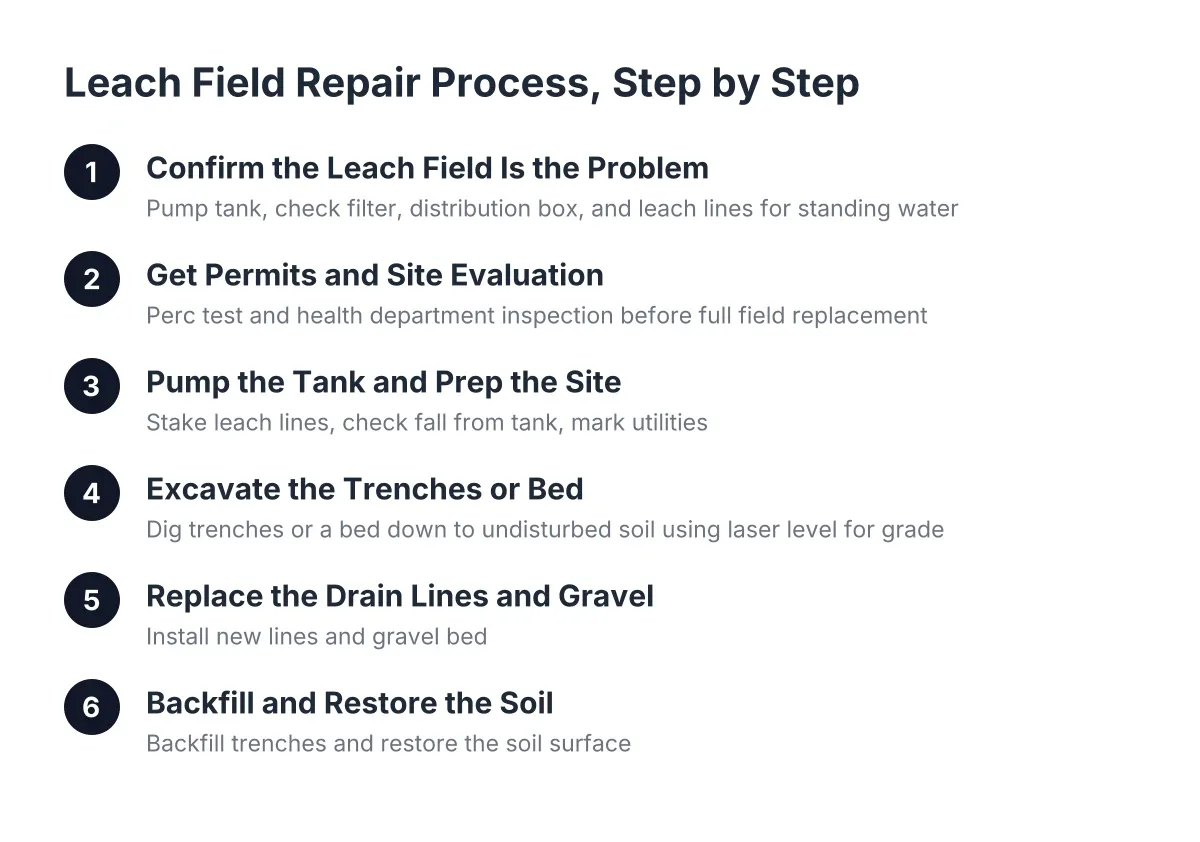
Step 1: Confirm the Leach Field Is Actually the Problem
Before anyone talks about digging up your yard, rule out the cheaper causes. Slow drains and backups often start at the tank or the filter, not the field.
First, have the septic tank pumped and inspected. If the tank is overfull with solids, the whole system backs up and mimics leach field failure. A septic tank pump out plus a septic tank filter cleaning fixes a surprising share of "failed field" calls. If drains flow normally after the pump out and stay that way for weeks, your field may be fine.
Next, check for these true leach field failure signs:
- Wet, soggy, or spongy ground over the field, even in dry weather
- Standing water or gray puddles above the lines
- Sewage odors in the yard, strongest near the field
- Grass over the field that is greener and taller than the rest of the lawn
- Backups that return within days of a fresh pump out
In addition, according to the U.S. Environmental Protection Agency, the whole system should be inspected every 1 to 3 years and the tank pumped every 3 to 5 years. If a system has gone a decade without a pump out, the field is the prime suspect, because solids likely carried over and clogged the soil.
Step 2: Get a Real Diagnosis Before Accepting a Verdict
A trustworthy diagnosis names the cause of failure, not just the symptom. Insist on it, especially if you are mid-sale and someone is pressuring you to sign off on a full replacement fast.
A proper septic system inspection of a suspect field usually includes exposing a section of the leach lines away from the tank. What the inspector finds there points to the repair path. Standing water in the lines means the soil is saturated and not absorbing. Dry lines with debris often mean a blockage or crushed pipe closer to the tank. Root masses point to tree intrusion, which is one of the more fixable problems.
For an anxious buyer or seller, this step is your protection. If a report says "drain field non-functional" with no cause listed, ask why it failed. The answer changes everything about cost.
Step 3: Match the Cause to the Repair Option
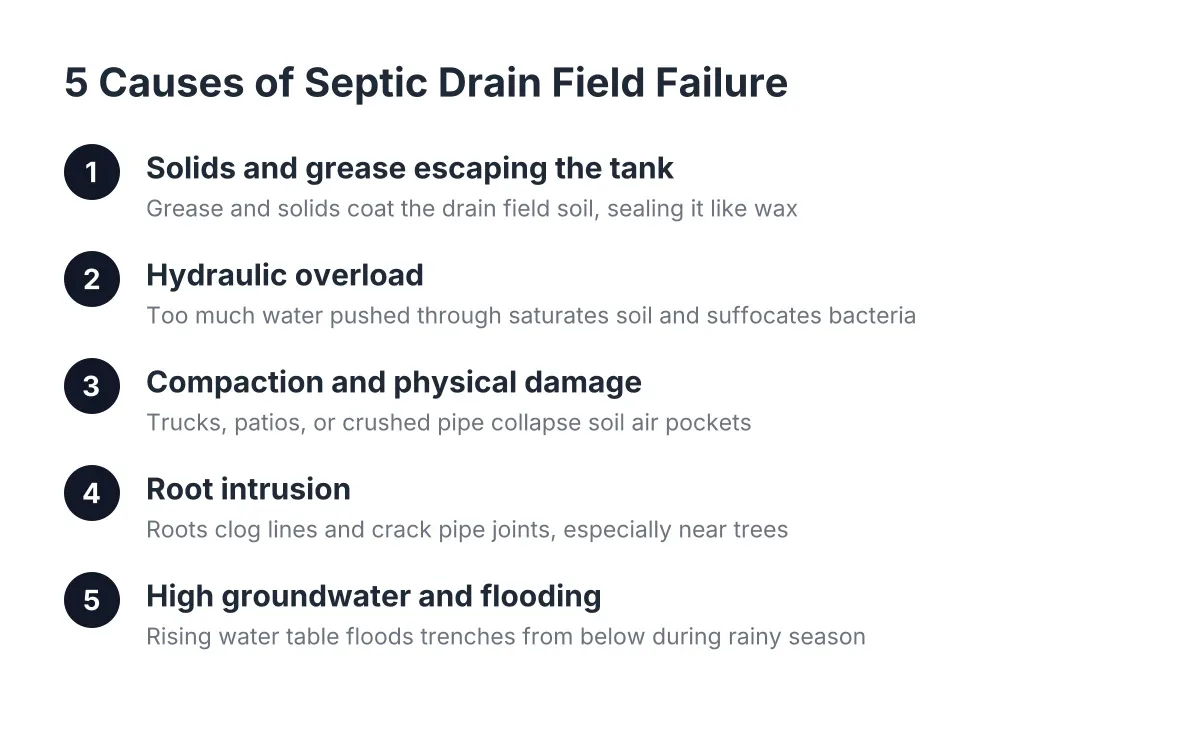
Once you know the cause, the repair options sort themselves out. Here is how the common failure modes map to fixes, roughly from least to most expensive:
- Hydraulic overload. Too much water, from leaky toilets, a new tenant load, or heavy laundry days. Fix the water source, pump the tank, and rest the field. Often no digging required.
- Clogged tank or outlet filter. Solved with septic tank cleaning and filter service. This is routine maintenance, not a repair.
- Root intrusion. Roots in the lines can be cut out mechanically, and the offending trees removed. Damaged pipe sections get replaced.
- Crushed or broken pipe. A vehicle parked over the field, or settling soil, can crush a lateral. Excavating and replacing that section is a targeted leach field repair, not a full rebuild.
- Biomat buildup or partial soil clogging. Some operators try aeration, jetting, or bacterial treatments as a remedial step before replacement. Results vary, and these work best on fields caught early.
- Saturated, biologically failed soil. Years of solids carryover ruin the soil itself. At this point pumping alone cannot fix it, and the field needs replacement.
Therefore, the question of whether to repair or replace a leach field splits into two answers. If the pipes failed but the soil is still absorbing, yes, repair is realistic. If the soil itself has failed from years of solids infiltration, no honest contractor will promise a repair; the ruined soil has to be excavated and replaced.
Step 4: Understand the Costs of Leach Field Repair and Replacement
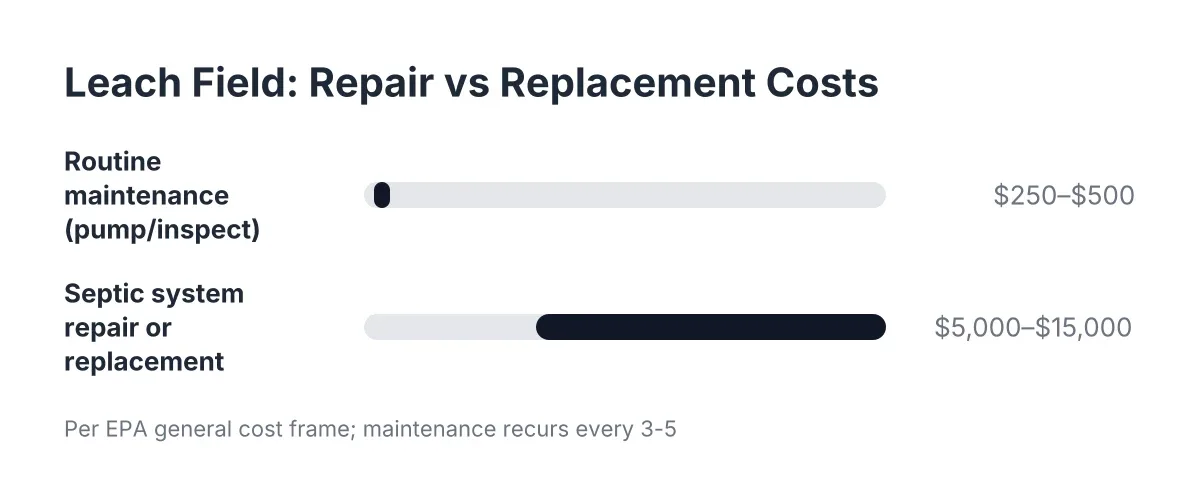
Nobody should have to sign a contract blind. As a general frame, according to the U.S. Environmental Protection Agency, repairing or replacing a malfunctioning septic system can cost between $5,000 and $15,000, while routine maintenance runs $250 to $500 every three to five years. That gap is the whole argument for catching field problems early.
As illustrative estimates only, targeted fixes such as clearing roots or replacing a crushed lateral section often land in the low four figures. Full drain field replacement sits at the high end of the EPA range and can exceed it in tight Miami-area lots where access is hard. The full cost to install a septic tank and leach field together runs higher still, since it covers both major components of the system.
Replacement also brings extra steps that add time and cost. A percolation test must be performed before installing a new system to confirm the soil drains properly, according to University of Nebraska-Lincoln Extension. Many jurisdictions also require an engineered design and permits. So if you are asking whether you can replace a leach field in the same spot, the answer depends on that perc test and local rules; sometimes the old footprint can be reused after the soil recovers, and sometimes a new area is required.
Step 5: If You Are Mid-Sale, Handle the Timeline in the Right Order
Say a seller in the Miami area gets a contract with a septic inspection contingency, and the inspector finds soggy ground over the field ten days before closing. In that hypothetical scenario, the right order is: pump the tank immediately, get a cause-specific diagnosis in writing, then get repair bids based on that cause. A written diagnosis lets both sides negotiate a credit or a repair instead of killing the deal over an unknown.
Buyers should never accept "field looks fine" without a recent pump out, since a full tank hides field problems. Sellers should keep every service record; documented septic tank pumping history is the cheapest credibility you can hand a nervous buyer.
Property managers face the same logic at portfolio scale. However, they have one advantage: scheduled pump outs and inspections across all septic-served units create a paper trail that catches field trouble early and supports insurance and liability files. One vendor, one documented history, fewer surprise excavations.
When to Repair vs. Replace Leach Lines
Homeowners can handle water conservation, fixing leaky fixtures, and keeping vehicles off the field, but the physical repair of leach lines is not a DIY job. Excavation, pipe replacement, perc testing, and permits require someone qualified to do the work legally. In most places, installing or replacing a drain field requires specific licensing beyond what a pumping crew carries, and mistakes buried underground are expensive to find later.
What you can do yourself, starting today, is protect the field. Spread out laundry loads, fix running toilets, keep gutters and pool backwash away from the field, and never park on it.
Step 6: Protect the Fix So You Never Do This Twice
A repaired or replaced leach field fails again if the habits that killed the first one continue. With proper maintenance, septic tanks can last up to 30 years, according to University of Florida IFAS, and the field lasts longest when solids never reach it.
Lock in a simple routine:
- Pump the tank every three to five years, sooner for heavy household or multifamily use
- Clean the outlet filter during each service visit
- Schedule a septic system inspection every 1 to 3 years
- For rental or commercial kitchens, add a grease trap clean out to the schedule, since grease is a fast way to clog a field
This matters beyond your own property line. Proper septic design and maintenance help protect Florida's groundwater, which supplies 90% of the state's drinking water, according to the Florida Department of Environmental Protection.
The Bottom Line: Can You Repair Leach Field Problems or Not?
Yes, you can repair leach field problems when the cause is roots, a broken pipe, a clogged tank, or too much water reaching the soil. No, you cannot repair a field whose soil has truly failed from years of solids; that soil must be excavated and replaced. The difference comes down to a real diagnosis, which is why the first two steps in this guide matter more than any bid.
One honest caveat: no article can diagnose your specific field. Soil, water table, and system age all change the answer, and in South Florida the high water table complicates fields that would be simple repairs elsewhere. Get eyes on the actual lines before you accept either a scary replacement quote or a too-good-to-be-true fix. A local Miami-area septic service that pumps the tank, inspects the field, and explains the cause in plain language gives you what you actually need: a decision you can defend at the closing table or the board meeting.
If you need septic tank pumping, Miami Septic Tanks can help.
Prefer to talk it through? Call (786) 756-8032 — a quick call is usually the fastest way to get a straight answer for your situation.