Septic Tank Pumping Terms Explained: A Plain-English Glossary
This septic tank pumping glossary is for Miami-area homeowners, buyers, and property managers who keep running into jargon while getting quotes or reading inspection reports. Each entry gives you a plain definition first, then tells you why the term matters when someone shows up with a truck and an invoice. Use it to understand what a provider is actually offering, ask sharper questions, and spot the difference between routine service and a bigger repair. No sales pitch, just the words explained.
- Septic Tank
- Leach Field
- Effluent Filter
- Baffle
- Riser
- Grease Trap
- Pump Out
- Sludge
- Scum Layer
- Septic Tank Cleaning
- Backflushing
- Septic System Inspection
- Gallons Pumped
- Locating Fee
- Hydrogen Sulfide
- Backup
- Sewer Tank Service
Parts of Your Septic System
Septic Tank
A septic tank is a buried, watertight container that holds wastewater from your home long enough for solids to settle and grease to float. Everything that goes down your drains ends up here first. The tank does not treat waste completely; it just separates it into layers so cleaner liquid can flow out to the drain field. Knowing where your tank sits on your property saves time and money on every service visit, because the crew has to dig less to find it.
Leach Field
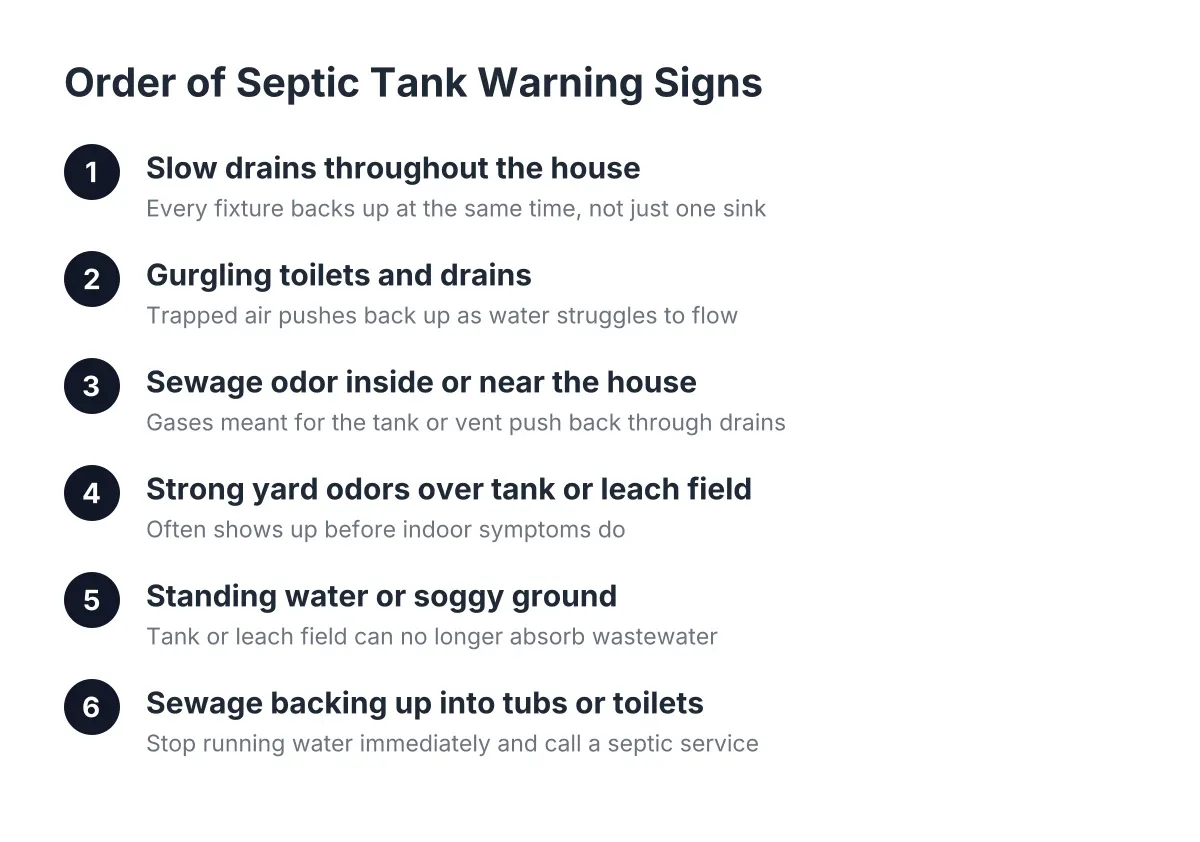
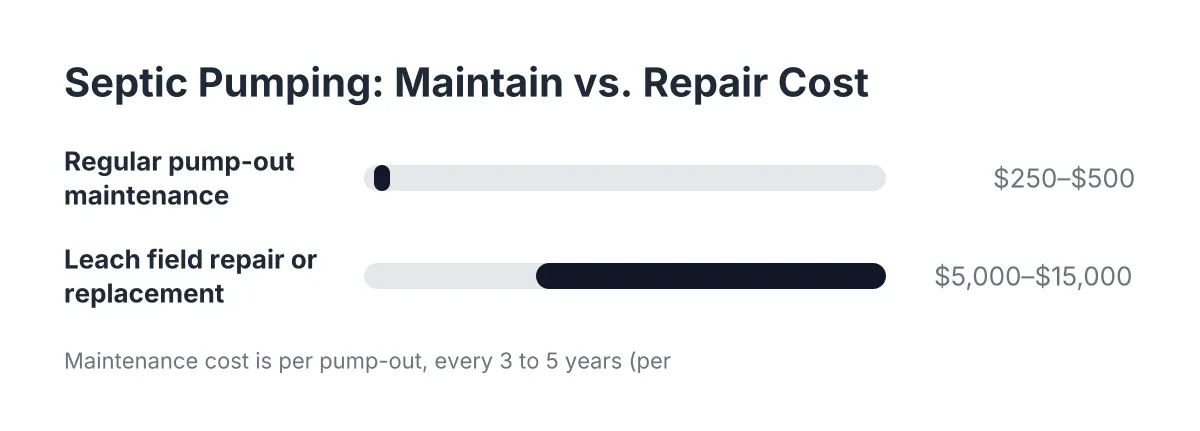
A leach field is the network of buried pipes and gravel trenches that spreads liquid from your septic tank into the soil for final treatment. It is also called a drain field or absorption field. If a provider mentions leach field repair, that is a bigger job than a pump out, because it involves the ground itself, not just the tank. Soggy grass, odors, or unusually green patches over the field are classic warning signs worth mentioning when you call.
Effluent Filter
An effluent filter is a screen inside the tank's outlet that stops solids from escaping into the leach field. It is a small part with a big job, because solids in the field are what ruin it. Septic tank filter cleaning is often a quick add-on during a pump out, and it is cheap insurance compared to leach field repair. If your system has one, ask the provider to clean and check it at every visit.
Baffle
A baffle is a barrier inside the septic tank that directs incoming flow downward and keeps the floating scum layer from leaving the tank. Most tanks have an inlet baffle and an outlet baffle. A broken or missing baffle lets solids slip into your leach field, so it is one of the first things a good technician checks during a pump out. If your quote mentions baffle repair, ask to see a photo of the damage before agreeing.
Riser
A riser is a pipe extension that brings the tank's access lid up to ground level so nobody has to dig to reach it. Older tanks often sit under a foot or more of soil, which means shovel work every time you need service. Installing risers costs money once but makes every future pump out faster and usually cheaper. If a provider suggests one, they are trying to save you digging fees down the road, not upsell you.
Grease Trap
A grease trap is a container that catches fats, oils, and grease from kitchen drains before they reach the septic system or sewer. Restaurants and commercial kitchens rely on them, and many need a grease trap clean out on a regular schedule. Grease that gets past the trap hardens in pipes and tanks and causes backups. If you manage a Miami-area business with a kitchen, grease trap cleaning is a separate service from septic work, so make sure your quote lists it clearly.
What Happens During Service
Pump Out
A pump out is the process of removing the liquid and solid waste from your septic tank with a vacuum truck. This is the core of septic tank service and the thing most people mean when they call. A proper septic system pump out removes the full contents, not just the liquid on top. If a quote seems unusually low, ask whether it covers the whole tank, because partial pumping leaves the sludge that causes problems.
Sludge
Sludge is the layer of heavy solids that sinks to the bottom of a septic tank over time. It builds up no matter how careful you are with your drains. When sludge gets too deep, it crowds out the space the tank needs to settle new wastewater, and solids start escaping to the leach field. Sludge depth is the main reason providers recommend regular septic tank pumping instead of waiting for a backup. Our Miami septic tank pumping service page explains what a routine visit covers.
Scum Layer
The scum layer is the floating mat of grease, oils, and light solids that sits on top of the liquid in a septic tank. Together with sludge, it tells a technician how full your tank really is. A thick scum layer often points to lots of grease going down the kitchen drain. If a provider measures your scum and sludge layers before pumping, that is a good sign they are checking condition, not just emptying and leaving.
Septic Tank Cleaning
Septic tank cleaning means removing everything from the tank, including the stuck-on sludge and scum, not just the easy liquid. Some companies use "pumping" and "cleaning" to mean the same thing, and some do not, so ask what your quote includes. A full septic tank cleaning may involve breaking up compacted sludge with water or agitation so the vacuum can pull it out. If your tank has gone many years without service, cleaning is usually what you actually need.
Backflushing
Backflushing means pumping some liquid back into the tank under pressure to stir up hardened sludge so it can be vacuumed out. It is a normal technique, not a problem sign. Technicians use it when solids have compacted at the bottom of a neglected tank. If a crew mentions backflushing, it usually means your tank was overdue, which is a nudge to get on a regular schedule.
Septic System Inspection
A septic system inspection is a check of the tank, baffles, filter, and drain field to find damage or early warning signs. Buyers often order one before closing on a home, and lenders sometimes require it. An inspection paired with a pump out gives the clearest picture, because the technician can see the empty tank's walls and baffles. If you are buying a Miami-area home with a septic system, an inspection is the single best way to avoid inheriting someone else's expensive problem.
Quotes, Paperwork, and Problem Signs
Gallons Pumped
Gallons pumped is the volume of waste the truck removes from your tank, and it is often how the service is priced. Most residential tanks hold a set number of gallons, and the invoice should reflect what came out. Ask up front whether the quote is a flat rate for your tank size or a per-gallon charge, so there are no surprises. The septic tank pumping cost guide walks through what drives the final number.
Locating Fee
A locating fee is a charge for finding a buried septic tank when the owner does not know where it is. Crews may probe the yard, follow the main drain line, or use records to find it. You can often avoid this fee by keeping a sketch or photo of the tank's location after your first service. If you just bought the home, ask the seller or check county records before your first pump out.
Hydrogen Sulfide
Hydrogen sulfide is the gas that gives septic systems their rotten-egg smell, and it can be dangerous in enclosed spaces. This is why homeowners should never climb into or lean over an open septic tank. If you smell strong sewer gas inside your home, that points to a dry trap, a venting issue, or a system backing up, and it is worth a call. Trained crews handle open tanks for a reason.
Backup
A backup means wastewater is coming up your drains instead of flowing out to the septic system. It is the most urgent septic problem a homeowner faces. A backup can come from a full tank, a clogged filter, a blocked line, or a failed leach field, and the fix depends on the cause. If you have a backup, stop running water and describe the symptoms clearly when you call a local septic cleaner near me service, because details help the crew bring the right equipment.
Sewer Tank Service
Sewer tank service is a general term for pumping and cleaning tanks that hold wastewater, whether they are standard septic tanks or other holding tanks. Some properties have holding tanks with no drain field, which need pumping more often. If your property has one, tell the provider before they quote, because the service schedule differs from a normal septic setup. Sewer tank cleaning follows the same basic process as a septic pump out.
Using These Terms
You now have the working vocabulary that septic tank pumping teams and service professionals use every day, which means you can read a quote line by line and know what each charge covers. When a provider mentions baffles, filters, or gallons pumped, you can ask exactly what they found and why it matters. Keep this septic tank pumping glossary handy for your next service call or inspection report, and the jargon stops being a barrier.