Signs Your Septic Tank Needs Pumping: Backups, Odors, and Slow Drains
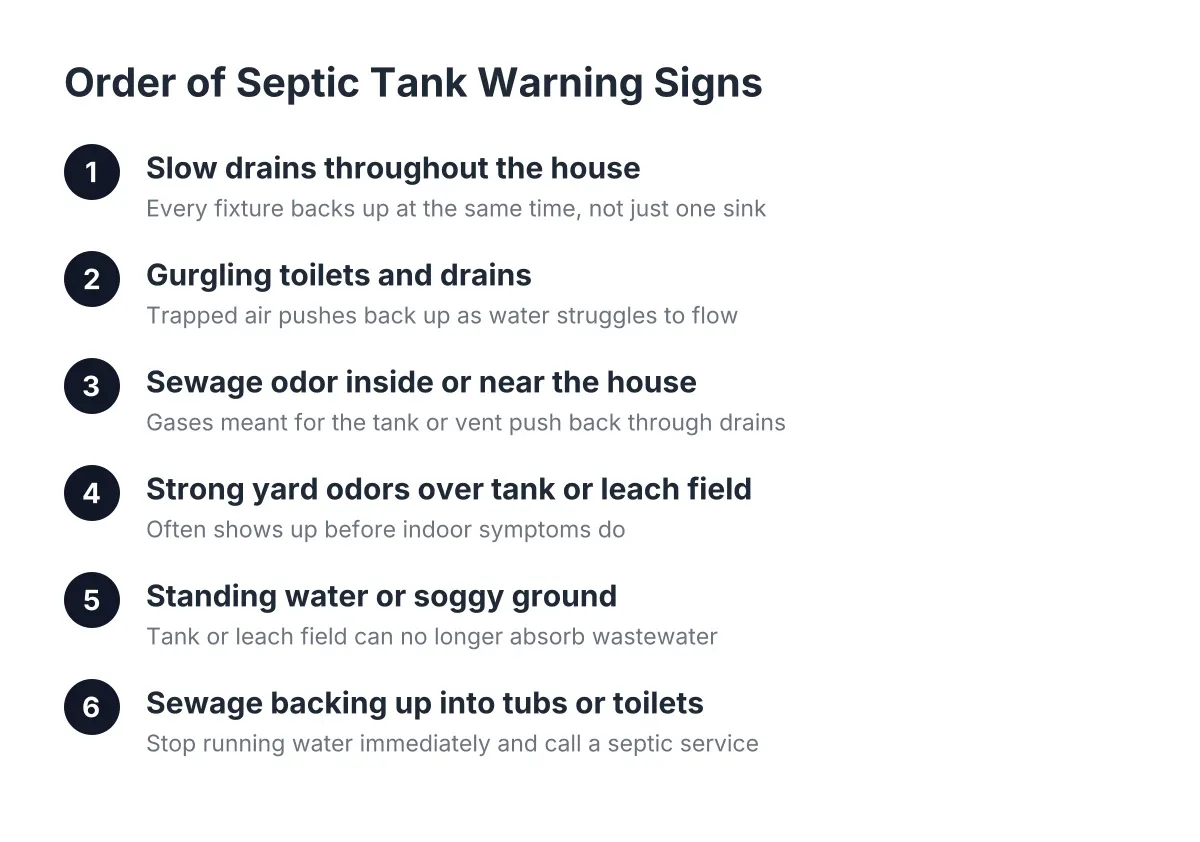
Sewage backing up through a toilet is scary, and it usually did not happen overnight. Most systems send septic tank warning signs for weeks first. Knowing the early warnings helps you catch the problem while it is still a routine pump out, not a flooded bathroom. This guide walks through eight warning signs, roughly in the order they tend to show up, and explains what each one means, what to do next, and when a full backup means you should stop running water and call a septic service.
One note before the list. Not every backup is a septic problem. Sometimes the tank is fine and the real issue is a clogged pipe between the house and the tank. A good local crew will check that before pumping anything, and this article will show you how to tell the difference too.
1. Slow Drains Throughout the House
One slow sink is usually a plumbing clog. Every drain in the house running slow at the same time is one of the earliest signs your septic tank is getting full. When solids build up in the tank, wastewater has nowhere to go, so every fixture backs up against the same bottleneck.
Try this quick test. If the kitchen sink, the shower, and the toilets all drain slowly, the problem sits past the point where those lines meet, which means the main line or the tank itself. In that case, drain cleaner will not help; it just adds harsh chemicals to a tank that needs a pump out.
For property managers, this pattern of septic tank warning signs matters across units. If tenants in two or three units on the same system report slow drains in the same week, treat it as one septic issue, not three plumbing tickets.
2. Gurgling Toilets and Drains
Gurgling is the sound of air fighting its way through water in a pipe that should flow freely. When a septic tank fills with solids, water drains in fits and starts, and trapped air bubbles back up through the nearest fixture. A toilet that gurgles when the washing machine drains is a classic example.
Therefore, do not write gurgling off as a quirk of an older house. Backing up and gurgling drains are typically the first warning a tank sends before sewage actually appears. Catching it here means a scheduled pump out instead of a weekend emergency.
3. Sewage Odor Inside or Near the House
A sewage smell in the house, especially near floor drains or in bathrooms, often means the tank needs to be checked and possibly pumped. Gases that should stay in the tank or vent above the roof are instead pushing back up through the drains. In Miami's heat and humidity, that smell tends to show up faster and stronger than it would in cooler climates.
However, odor alone does not always mean a full tank. A dried-out floor drain trap can cause the same smell. Run water into rarely used drains first. If the smell stays, and especially if it pairs with slow drains or gurgling, put the tank at the top of the suspect list.
4. Strong Odors in the Yard Over the Tank or Leach Field
Step outside and walk the area over your tank and leach field. A persistent sewage smell in the yard often means the tank is full and wastewater is escaping where it should not. Sewage odor near the tank lids is one of the more reliable outdoor signs, though other causes are possible, such as a leaking lid seal or a failing baffle.
For example, suppose a homeowner in a Miami suburb notices a swampy smell near the back fence every afternoon. The grass looks normal and the drains inside seem fine. That smell is still worth a call, because outdoor odor often shows up before indoor symptoms do. An inspection at that stage is cheap compared to what comes next on this list.
5. Standing Water or Soggy Ground Near the System
Pooling water or mushy soil over the tank or leach field, when it has not rained, means wastewater is surfacing. Either the tank is so full that liquid is escaping at the lids, or the leach field is overloaded and can no longer absorb what the tank sends it. South Florida's high water table makes this worse; a saturated field here has less margin than one on higher, drier ground.
As a result, this sign deserves fast action. Standing sewage in a yard is a health hazard for kids, pets, and tenants. It also matters beyond your property line. Proper septic maintenance helps protect Florida's groundwater, which provides 90% of the state's drinking water, according to the Florida Department of Environmental Protection.
6. Unusually Green or Lush Grass Over the Leach Field
Grass over a healthy leach field should look like the rest of the lawn. A bright green stripe or patch that outgrows everything around it means the grass is feeding on wastewater rising too close to the surface. It reads as a nice lawn, but it is an early sign of an overloaded field.
In addition, this is one of the signs a septic tank needs to be pumped that HOA boards and property managers can spot on a routine drive-through, before any tenant complains. One conventional tank removes only about 30 percent of the nitrogen that flows into it, according to University of Florida IFAS, so an overloaded system pushes even more nutrients into the soil around it. Catching a lush patch early can mean the difference between a pump out and a leach field repair.
7. Sewage Backing Up Into Tubs, Showers, or Toilets
This is the sign nobody misses. Sewage rising into the lowest drains in the house, usually a shower or tub, means wastewater has nowhere left to go. If this is happening right now, stop running water. Every flush, every load of laundry, and every shower adds to what is backing up into your home.
Here is the honest part most articles skip: a backup does not automatically mean the tank is full. Plumbers sometimes call for pumping just because a tank looks full to the top, when a tank full of clear liquid can be normal for a system that was recently pumped. The real culprit may be a clog elsewhere. A clogged inlet baffle is a common cause of septic backups and should be one of the first things checked, according to the Washington State Department of Health. A crew that opens the lid and looks at what is actually in the tank, instead of just quoting a pump out, is the one you want.
That said, a backed-up system with a thick floating scum layer at the inlet is the clearest confirmation among all the signs your septic tank is backed up because it genuinely needs pumping. Whichever way it goes, a backup this severe is not a DIY situation; call a professional before anyone tries to snake or open anything.
8. Maintenance Calendar and Inspection Schedule
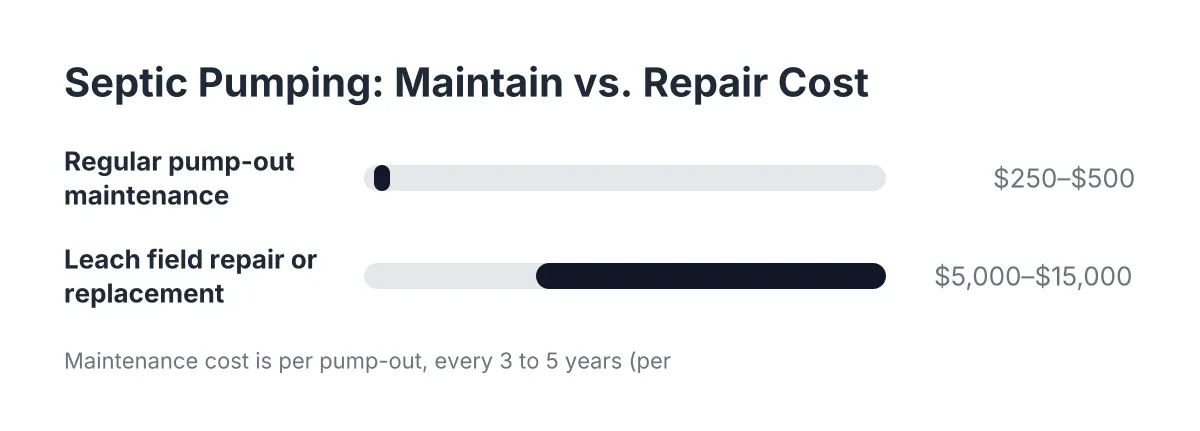
Not every warning is a symptom. Sometimes the sign is the calendar. Tanks need periodic pumping regardless of how long you have gone without a problem; solids accumulate silently, and a long delay can turn a routine service call into a repair bill. The EPA recommends inspecting the entire system every 1 to 3 years and pumping the tank every 3 to 5 years, and notes that routine maintenance costs of $250 to $500 every few years are a bargain next to a $5,000 to $15,000 repair or replacement.
Household size moves that schedule. For an active family of four, pumping every two to three years is generally advisable because of higher solids and liquid production, according to Penn State Extension. Pumping too often wastes money; waiting too long invites the seven problems above. If you cannot remember your last pump out, or you just bought the property and have no records, a septic system inspection settles the question.
For property managers, records are the whole game. A documented pumping history across a portfolio of septic-served buildings makes vendor bids comparable, satisfies pre-sale inspections, and shortens the argument when a tenant complaint escalates. As of 2026, many managers put every septic property on one shared pumping calendar with a single local vendor instead of handling each backup as a surprise.
What to Do When You Spot These Signs
First, cut water use. If drains are slow or backing up, pause laundry, dishwashers, and long showers until someone looks at the system. Less water in means less pressure on a tank that is already struggling.
Next, gather what you know before you call. A septic service can help you faster, and quote more honestly, when you can answer a few basics:
- Which symptoms you are seeing, and whether they affect one drain or the whole house
- When the tank was last pumped, if you know
- Where the tank and lids are, if you know
- Whether the property has a grease trap, a filter, or a pump system
- For managers, how many units share the system
Then be ready for what a legitimate visit looks like. The crew locates and opens the tank, checks the scum and liquid levels, pumps out the solids, and looks at the baffles and filter before closing up. Many slow-drain complaints trace back to a dirty outlet filter, so septic tank filter cleaning is often part of the same stop. If the crew finds a deeper issue, such as leach field damage, they should show you what they found before talking about repairs.
Choosing a Local Septic Service Without the Runaround
When you search for septic companies near me during a backup, the top results are often national lead-gen sites that route your call out of state and sell it to whoever pays. That is where the fear of emergency price-gouging comes from. A better filter: does the person on the phone know Miami-area soil, water tables, and permitting, or are they reading from a script written for every metro in the country?
When comparing septic pumping companies near me, weigh a few things:
- Local knowledge, since South Florida's high water table changes how systems behave
- Willingness to diagnose before pumping, not quote a pump out sight unseen
- Written records after each visit, which matter for resale, insurance, and HOA files
- Range of services, so filter cleaning, grease trap clean out, and leach field repair do not require a second vendor
Trade-offs exist here. A one-truck local operator may know your neighborhood but book out further. A larger outfit may come sooner but treat your tank as a line item. For a single home, responsiveness may win. For a portfolio, documented history and single-vendor convenience usually matter more than shaving a little off one visit; the cheapest septic tank pumping quote is rarely the cheapest system to own over ten years.
The Bottom Line
Slow drains, gurgling, and odors come first. Soggy ground and lush grass come next. Backups come last, and by then the fix is urgent instead of routine. With proper maintenance, University of Florida IFAS notes that a septic tank can last up to 30 years, so the tanks that fail early are usually the ones nobody looked at until sewage was already in the tub.
Treat the early signs as the cheap ones. A pump out on your schedule beats a backup on the tank's schedule, every single time.
If you need septic tank pumping, Miami Septic Tanks can help.
Prefer to talk it through? Call (786) 756-8032 — a quick call is usually the fastest way to get a straight answer for your situation.